
Last updated: August 16, 2026
Lead list building for SaaS companies in Scarborough Toronto using Clay Apollo workflows shaved roughly 60% off manual research time for a mid-market outbound program targeting CFOs, and it did it in about eight weeks, not overnight. This is not a single named account we’re naming publicly – it’s the pattern we see constantly when a Scarborough-based SaaS company with a finance-persona offering finally rebuilds its outbound list from scratch instead of patching an old spreadsheet. If you’re a VP of Sales in Scarborough staring at a CRM full of stale contacts and a founder asking why the pipeline dried up, this is the walkthrough you want.

A Scarborough SaaS company selling to mid-market CFOs cut manual research time by roughly 60% by pairing Apollo.io for firmographic and title-level sourcing with Clay for waterfall enrichment and CFO-specific segmentation. Lead list building runs $800-$1,500 CAD per campaign at Best Leads, and full-service done-for-you management starts at $5,200-$8,500 CAD/month on a 3-month minimum. The single biggest time sink wasn’t finding CFO contacts – it was verifying which ones still worked there.
The Situation
What We Found
The lead list this Scarborough SaaS team was working from had been assembled once, never refreshed, and never segmented by company size or industry vertical. It was one big list, sent one generic message, to everyone from a 40-person startup CFO to a 900-person manufacturer’s finance director. Apollo.io and HubSpot benchmark data both point to the same conclusion we see in the field: response rates drop by roughly 60% when audiences aren’t refined by industry, headcount, or pain point before the first send goes out.
The second problem was staleness. CFO turnover is high enough that a list built in 2024 has meaningful decay by mid-2026 – titles change, people get promoted into VP Finance roles, some leave the company entirely. Nobody on the internal team had a verification protocol, so every campaign was quietly bouncing off dead inboxes and burning sender reputation in the process.
We’ve seen this exact bounce problem before in a different Toronto engagement – a Toronto staffing agency came to us with a 40% email bounce rate from poor list hygiene. Rebuilding that list with verification protocols and rewriting sequences around hiring-manager pain points dropped their cost-per-meeting from $285 to $118 while tripling reply rates. The mechanics are nearly identical whether the persona is a hiring manager or a mid-market CFO: dirty data poisons everything downstream of it.
“Every SaaS founder wants to talk about copy first. Honestly, I didn’t believe this until we tested it ourselves – copy improvements barely move the needle if the list underneath it is 18 months stale and unsegmented. Fix the list, then fix the words.” – Best Leads Team
How We Solved It
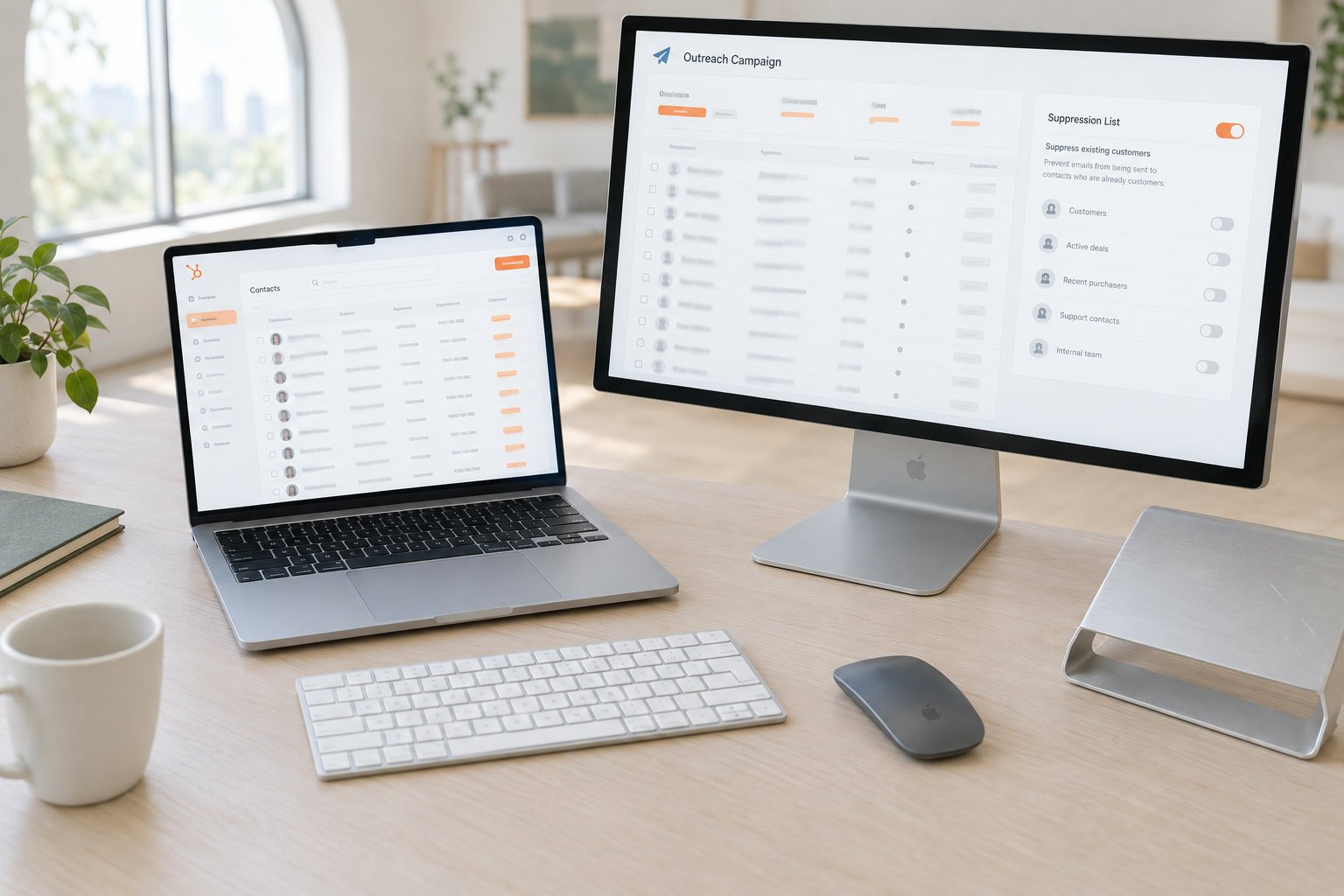
Rebuilding a CFO-targeted list for a Scarborough SaaS company means using Apollo.io and Clay for what each does best – not picking one over the other. Apollo.io is the sourcing layer. Clay is the enrichment and waterfall layer that turns a rough list into a verified, segmented, sales-ready one.
Define the ICP down to the title, not just the department
For this Scarborough SaaS company, the ICP wasn’t “finance leadership” – it was CFOs and VP Finance at companies with 150-1,000 employees in specific verticals where the automation product actually paid for itself within two quarters.
Source in Apollo.io using firmographic filters
Apollo.io’s database pulled the raw list of matching companies and title-level contacts by headcount, industry, and revenue band – the first pass, not the final list.
Run the list through Clay’s waterfall enrichment
Clay cross-checked each contact against multiple data providers in sequence, catching title changes and confirming current employment before a single email went out – this is the step that cuts manual research the most.
Segment into three ICP variations
Instead of one list, we built three: fast-growth mid-market SaaS finance teams, established manufacturers, and professional services firms – each getting a message built around their specific budget cycle.
Sync verified contacts into HubSpot or Salesforce
Clean, deduplicated records flowed straight into the client’s CRM so sales reps never touched a spreadsheet again.
Write and A/B test scripts around the CFO’s actual problem
The copy dropped “cutting-edge” and “industry-leading” language entirely and led with a specific outcome, tested across the three ICP segments in parallel.
Route every reply to a dedicated response manager
Nobody’s inbox was left to guess – replies got triaged and answered same-day, because a hot CFO reply left sitting for 24 hours is a meeting that quietly disappears.
One thing worth admitting: follow-up timing tripped up the internal team more than the list did. They were sending a second email on day 2 or 3 – too pushy – or waiting past day 14, by which point the prospect had forgotten the first message entirely. The sweet spot we hold to is day 4 through day 7. Most in-house teams ghost after one send and quietly assume silence means “not interested,” when it usually just means the email landed during a board meeting week.
Result
What This Means for Scarborough SaaS Teams
If you’re a Scarborough SaaS sales leader with a CRM built two hiring cycles ago and a rep who’s quietly become a part-time researcher, the lesson isn’t “buy Apollo” or “buy Clay.” It’s that the two tools solve different problems, and neither one fixes bad segmentation on its own. Apollo.io finds the CFO. Clay confirms they’re still there and still relevant to your specific vertical.
The second lesson is about ownership. A verified, enriched list decays again within months if nobody re-runs it. We treat lead list building as an ongoing process, not a one-time deliverable, which is why our full-service engagements bundle re-enrichment into monthly management rather than charging for a fresh list every quarter.
The third lesson, and the one most founders resist, is that reply management is not optional infrastructure – it’s the difference between a booked meeting and a reply that sits in someone’s inbox until the CFO has moved on to the next vendor conversation. This is the same pattern that let a different SaaS account we managed lift its reply-to-demo conversion from roughly 8% to 31% within six weeks, simply by adding daily response workflows instead of letting replies sit.
What Lead List Building Actually Costs for a Toronto SaaS Company
Pricing for outsourced lead generation in Toronto varies by scope, but the ranges below are what Best Leads actually charges – not vague “starting from” figures.
| Service | Price (CAD) |
|---|---|
| Lead quality audit + strategy session | $500-$750 |
| Lead list building + research (per campaign) | $800-$1,500 |
| Email script development + A/B testing setup | $1,200-$2,000 |
| Response management + meeting booking (monthly) | $1,500-$2,500 |
| HubSpot or Salesforce integration + automation | $1,000-$1,800 |
| Full-service done-for-you campaign (3-mo min) | $5,200-$8,500/month |
On the tool question that dominates page one of Google right now – Clay versus Apollo versus building it yourself – the honest answer is that each wins in a different scenario. Apollo.io wins when a team needs a large, filterable database fast and doesn’t yet have complex enrichment logic to run. Clay wins when accuracy and multi-source verification matter more than volume, which is exactly the case for a CFO-only list where one wrong title tanks deliverability. Building it entirely in-house with spreadsheets and manual LinkedIn checks wins only when the total addressable market is under a few hundred accounts – past that, the hours lost to manual research outweigh any tool subscription cost.
Frequently Asked Questions
How long does lead list building for a Scarborough SaaS company using Clay and Apollo actually take?
A verified, segmented CFO-focused list typically takes 2-3 weeks to build and enrich through Apollo.io and Clay before the first campaign launches. Ongoing re-enrichment then runs monthly to catch title changes and job moves, which is why we bundle it into managed campaigns rather than one-time deliveries.
What does lead list building cost for a Toronto SaaS company?
Lead list building and research per campaign runs $800-$1,500 CAD at Best Leads, with a lead quality audit and strategy session priced at $500-$750 CAD if you’re diagnosing an existing list first. Full-service programs that include ongoing enrichment, copywriting, and response management run $5,200-$8,500 CAD/month on a 3-month minimum.
Why did research time drop 60% instead of just improving reply rates?
Research time dropped because Clay’s waterfall enrichment automated the manual title-verification work a rep had been doing by hand in Scarborough – roughly 12 hours a week reclaimed. Reply rates improved separately, as a downstream effect of better segmentation and CFO-specific copy, not from the time savings itself.
Should a Scarborough SaaS company use Clay, Apollo.io, or both?
Most Toronto-area SaaS companies targeting mid-market CFOs get the best result using both together: Apollo.io for initial sourcing at scale, Clay for waterfall enrichment and verification before a send. Using Apollo alone risks stale titles; using Clay alone without a sourcing engine means starting from too small a pool.
Sources
- Canada’s Anti-Spam Legislation requirements for commercial electronic messages – Government of Canada, Fight Spam
- Apollo.io data enrichment and firmographic search capabilities – Apollo.io
- Clay waterfall enrichment and data verification workflow – Clay.com
- Email segmentation and response rate benchmark data – HubSpot Sales Blog
Best Leads
Our Primary Offerings: Reliable Lead Generation Email Marketing Services.
Get a Clay + Apollo Lead List Audit for Your Toronto SaaS Company →
 Listen to article
- How a Toronto SaaS Startup Booked 23 Sales Meetings in 60 Days Using Cold Email Outreach
- A Toronto SaaS Founder Asked: ‘If We Already Have Apollo.io, Why Do We Need a Cold Email Agency to Build Our Lead Lists?’ — The Real Answer
- Apollo vs HubSpot vs Salesforce for Lead List Building: Which Tool Delivers Cleaner ICP Data at Scale
- Outsourced Lead Generation for an Etobicoke B2B Tech Company With a Stalled Outbound — How 3 ICP Adjustments Unlocked 17 Booked Meetings
- A Toronto Founder Asked: “Why Are Our Cold Emails Getting Ignored Even With a Clean Lead List?” — A Full Diagnosis