
Building a qualified B2B lead list isn’t about quantity—it’s about precision. The companies that dominate their markets don’t chase every prospect; they target the right prospects at the right time. In this comprehensive guide, we’ll walk you through the entire process of creating high-converting B2B lead lists that actually close deals.

Quick Summary: This guide covers identifying your ideal customer profile (ICP), sourcing quality data, segmenting prospects strategically, and validating email accuracy before launch. You’ll learn how to avoid common B2B lead list mistakes that waste thousands in outreach budget and discover the exact frameworks sales leaders use to build lists that convert at 5-8% rather than below 2%.
Table of Contents
1. Understanding Your Ideal Customer Profile (ICP)
Before you build a single B2B lead list, you need absolute clarity on who you’re targeting. Your Ideal Customer Profile (ICP) is the foundation of everything that follows—it’s the blueprint that separates high-quality prospects from tire-kickers.
An ICP isn’t a vague description. It’s a detailed, data-driven profile built from your best customers and market research.
Define Your Best Customer Characteristics
Start by looking backward. Which 5-10 customers generate the most revenue, have the longest retention, and require the least support? These are your power customers—the ones that validate your business model.
Extract the common patterns:
- Company Size: How many employees? Revenue range?
- Industry Vertical: What specific industries cluster together?
- Geographic Location: Are they regional, national, or global?
- Growth Stage: Bootstrapped, Series A, established? Hypergrowth or stable?
- Budget Authority: Who holds budget? C-suite, department head, or procurement?
- Pain Points: What specific problems were they solving?
Build Your ICP Framework
Create a structured document with these key dimensions:
| ICP Dimension | Your Profile | Why It Matters |
|---|---|---|
| Company Size | 50-500 employees | Decision speed and budget size |
| Annual Revenue | $5M – $50M ARR | Purchase power and fit |
| Primary Industry | SaaS, FinTech, PropTech | Industry pain points align |
| Decision Maker Title | VP Sales, Sales Director | Contact relevance and authority |
| Geographic Region | US (East Coast, Midwest) | Time zones and compliance |
| Key Pain Point | Low lead quality, high CAC | Message resonance |
This framework becomes your filter for every prospect you consider adding to your B2B lead list.
2. Where to Source Quality B2B Prospect Data
Not all data sources are created equal. The quality of your B2B lead list directly determines your campaign success rate. Garbage in, garbage out applies universally to lead generation.
Primary B2B Data Sources
Here’s where professional sales teams actually find quality prospects:
- Intent Data Platforms (Apollo, ZoomInfo, Hunter.io): These tools scrape company websites, track hiring, funding announcements, and technology changes. Quality is high, but costs range $500-2,000+ monthly.
- LinkedIn Sales Navigator: Best for finding specific decision makers and validating contacts. Limited scalability but high accuracy. ~$65-99/month per user.
- Industry-Specific Directories: Trade association lists, industry reports, and vertical-specific databases often have the freshest data.
- Public Records and Company Filings: SEC filings, startup funding databases, and corporate websites provide verified information.
- Customer Referrals & Warm Introductions: Your existing customers know others like them. Referral-sourced prospects convert 4x better.
Data Accuracy Matters (More Than You Think)
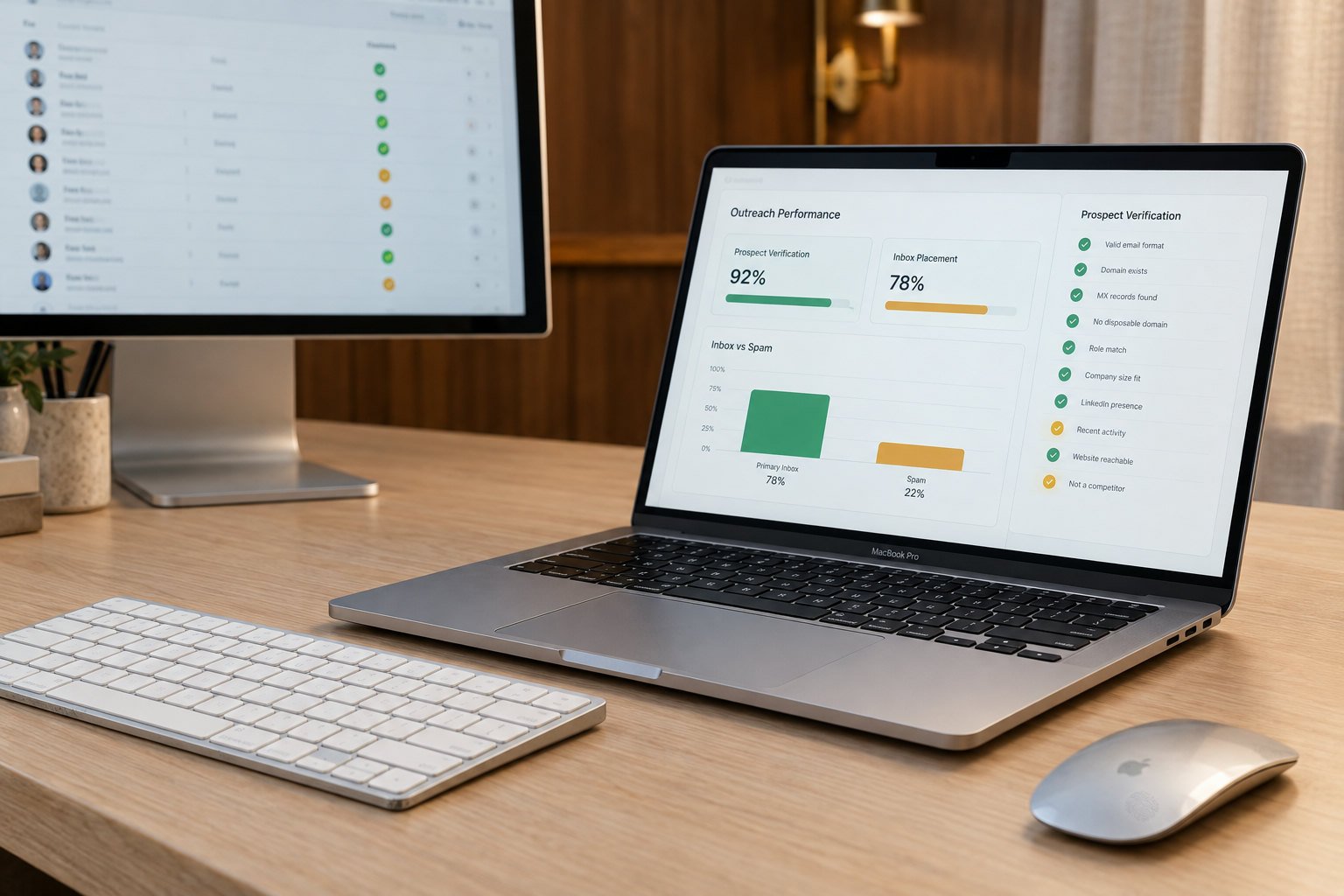
A single incorrect email address wastes your outreach investment and damages domain reputation. Email bounce rates above 5% signal poor data quality. In 2024, average bounce rates from premium data providers hover around 2-3%.
When sourcing data, verify:
- Email format consistency and domain legitimacy
- Company information (size, revenue, funding status)
- Decision maker title and job function alignment with ICP
- Data recency (updated within 30-60 days)
3. Segmentation Strategies That Drive Higher Response Rates
You have 2,000 prospects in your B2B lead list. Do you send the same email to all of them? Absolutely not. Segmentation is the difference between a 2% response rate and an 8% response rate.
Strategic segmentation allows you to customize messaging, timing, and cadence for different prospect groups.
Segmentation Dimensions
Firmographic Segmentation: Divide by company characteristics—size, industry, revenue, location. Send different messages to a 50-person bootstrapped startup versus a 500-person Series B company; their pain points differ dramatically.
Behavioral Segmentation: Separate prospects by recent actions—recent funding, hiring spree, technology adoption, website visits. A company that just raised $5M is more likely to buy than one in steady state.
Geographic Segmentation: Time zones matter for response rates. Send emails 8-10am in the recipient’s local time for maximum open rates. If your list spans 4 time zones, segment accordingly.
Role-Based Segmentation: VP of Sales hears a different pitch than Chief Revenue Officer or Sales Director. Customize your messaging by job title and function.
Building Your Segmentation Strategy
Start simple, then expand complexity. Here’s a practical framework:
| Segment Type | Example Segments | Expected Lift |
|---|---|---|
| Firmographic | 50-200 emp | 201-500 emp | 501-1000 emp | +15-20% response |
| Behavioral | Recent funding | Hiring | Website visitor | +25-35% response |
| Geographic | EST | CST | PST timezone groups | +10-12% response |
| Role-Based | VP Sales | Sales Director | Sales Manager | +20-30% response |
| Combined (2+ dimensions) | Mid-size SaaS, VP Sales, East Coast + Recent hire | +40-60% response |
The more granular your segmentation, the higher your response rates—but there’s a trade-off. Too many micro-segments make campaign management unwieldy. Start with 3-5 primary segments and expand from performance data.
4. Validating and Cleaning Your B2B Lead Lists
A dirty B2B lead list will destroy your email deliverability and waste your budget. Before you hit send on any campaign, you need to validate every contact.
Email Validation Essentials
Use dedicated email validation tools (ZeroBounce, NeverBounce, Clearout) to verify addresses. These services check email syntax, domain validity, and mailbox existence.
What to look for:
- Valid Emails: Deliverable addresses with active mailboxes. Keep these.
- Catch-All Domains: Some companies accept all emails. Use caution; validate differently.
- Risky Emails: Questionable format or suspicious patterns. Consider removing.
- Invalid Emails: Syntax errors, non-existent domains, role-based (noreply@). Remove immediately.
De-Duplication and Compliance Checks
Remove duplicates. If your list has the same person listed 3 times under different company names, you’ll send redundant emails and damage your sender reputation.
Verify compliance. Check for Do Not Contact lists (DNC), GDPR consent requirements, CASL regulations if Canada-targeted, and CAN-SPAM rules for US outreach. Non-compliance results in legal liability and platform bans.
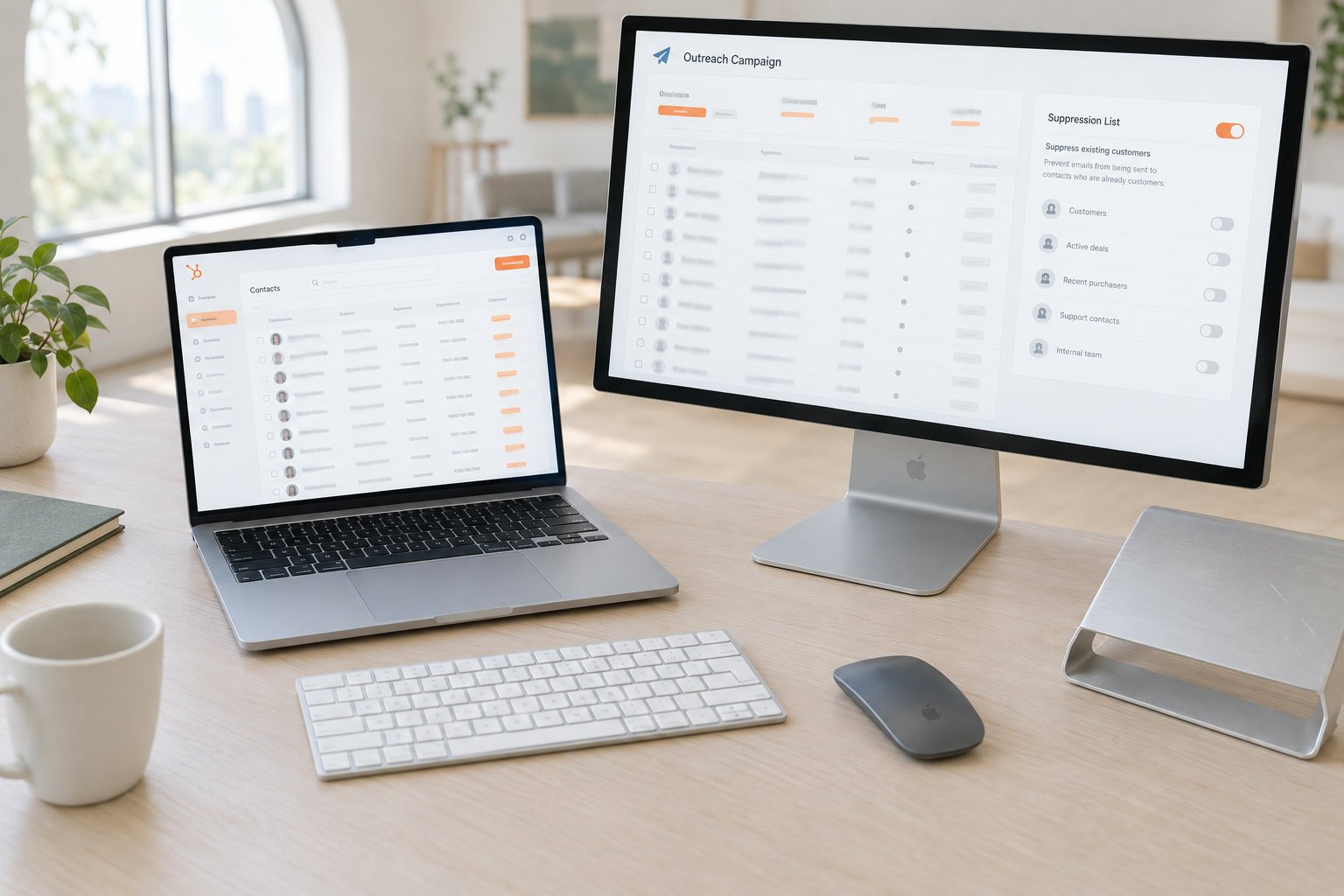
Exclude existing customers and recent bounces. Don’t waste outreach on people already in your system. And if someone bounced in a previous campaign, don’t email them again.
List Quality Scoring
Create a simple quality score for each prospect:
- Email verified + Valid (1 point)
- Matches ICP firmographics (1 point)
- Decision-maker title confirmed (1 point)
- Recent data (updated within 60 days) (1 point)
- Shows buying intent/trigger event (1 point)
Prospects scoring 4-5 are your A-list. Start there. Work through 2-3 tier prospects as you scale.
5. Building Scalable Lead List Systems
Building a B2B lead list once is tactical. Building a system that generates fresh, qualified leads continuously is strategic. Here’s how to scale responsibly.
Continuous List Building and Refresh
Your lead list decays. Job changes, company closures, email address changes—on average, 20-25% of B2B contact data becomes invalid annually.
Implement a refresh cadence:
- Monthly: Add 10-15% new prospects from your priority segments
- Quarterly: Re-validate entire active list against your source data
- Bi-annually: Update firmographic data (company size, funding, technology stack)
Set calendar reminders. Assign list maintenance to someone on your team (or partner with a lead generation service that handles it for you).
Tracking and Attribution
You need to know which leads actually convert. Tag every prospect in your B2B lead list with metadata:
- Source (Apollo, LinkedIn, referral, etc.)
- List segment (size, industry, role, trigger event)
- Date added
- Campaign(s) contacted via
- Response status and outcomes
Use Salesforce, HubSpot, or similar CRM to maintain these records. Tools like best lead generation platforms integrate directly with your CRM, automating this tracking.
Performance Metrics That Matter
Track these KPIs for each B2B lead list segment:
- Email Delivery Rate: Should be 95%+ after validation
- Open Rate: Benchmark is 18-25% for cold outreach
- Reply Rate: Benchmark is 2-5% for targeted campaigns
- Conversion Rate (MQL to SQL): 15-30% of replies should qualify as sales meetings
- Cost Per Lead: Divide total campaign cost by leads generated
- CAC (Customer Acquisition Cost): Calculate revenue per customer from each list segment
Automation and Workflow Integration
Stop managing lists manually. Use automation to:
- Auto-upload fresh prospects from your data source weekly
- Automatically validate and deduplicate
- Trigger email sequences based on segment triggers
- Log responses and engagement automatically in CRM
- Flag high-quality replies for immediate follow-up
Services like Best Leads provide end-to-end automation—from list building through response management, handling the operational complexity so your team focuses on closing deals.
Frequently Asked Questions
How large should my B2B lead list be to start a campaign?
Start with 500-1,000 prospects minimum for statistical significance. This gives you enough data to optimize and identify what works. If you launch with 50 prospects, a 2% response rate nets only 1 meeting—too small to draw conclusions. Once you’ve proven your messaging and segmentation with 1,000 prospects, scale to 5,000-10,000+.
What’s the difference between a B2B lead list and a B2B prospect list?
Technically, these terms are used interchangeably in most contexts, but there’s a subtle distinction. A prospect list is simply contact information (names, emails, companies). A lead list is more refined—it’s prospects filtered to match your ICP with verified contact data and segment information attached. In modern B2B sales, quality lead lists with ICP alignment matter far more than generic prospect lists.
How often should I update my B2B lead lists?
Implement a monthly refresh cycle to add new prospects and a quarterly re-validation to ensure existing contacts remain current. With 20-25% annual data decay, quarterly validation prevents your list from becoming stale and deliverability issues from mounting. For critical campaigns, validate immediately before launch.
Can I buy pre-made B2B lead lists, or should I build them myself?
Buying pre-made lists is tempting but risky. Quality varies dramatically, accuracy is often poor, and you have no control over messaging alignment. Building your own lists (or working with a specialized lead generation partner) ensures ICP alignment, recent data, and proper segmentation. Pre-built lists work as starting points for research, but investment in custom list building pays dividends in conversion rates.
Final Thoughts: From Lists to Sales Meetings
A high-converting B2B lead list isn’t magic. It’s the result of strategic thinking, quality data sources, and relentless testing.
You now understand the full framework:
Build your ICP → Source quality data → Segment strategically → Validate thoroughly → Test and optimize → Scale what works.
The companies winning in B2B sales right now aren’t the ones with the biggest lists. They’re the ones with the most relevant lists—the ones that understand their ideal customers deeply and reach them with perfectly-timed, personalized messaging.
Starting today, apply what you’ve learned. Define your ICP with absolute clarity. Audit your existing list for accuracy. Implement segmentation across your top 3-5 prospect groups. And commit to monthly refreshes to keep data fresh.
If list building and management feels overwhelming, that’s exactly what professional B2B lead generation services exist to solve. But whether you DIY or partner with experts, the principles in this guide remain constant: quality, relevance, and validation.
Ready to Build a High-Converting Lead List?
Best Leads handles B2B lead list creation, email scripting, campaign management, and response handling. We’ve helped companies across SaaS, FinTech, and enterprise verticals generate consistent, qualified sales meetings month after month.

 Listen to article
- The Complete Guide to B2B Cold Email Lead Generation for Small and Mid-Size Businesses
- The Beginner’s Guide To B2B Lead Generation Services in 2025
- How To Outsource Your B2B Lead Generation Without Sacrificing Quality
- Lead Generation with Salesforce vs HubSpot vs Apollo: Which Platform Drives More Booked Calls for B2B Teams
- The Complete Guide To Using Apollo for B2B Prospecting and Outreach
This article was drafted with AI assistance to ensure factual accuracy.