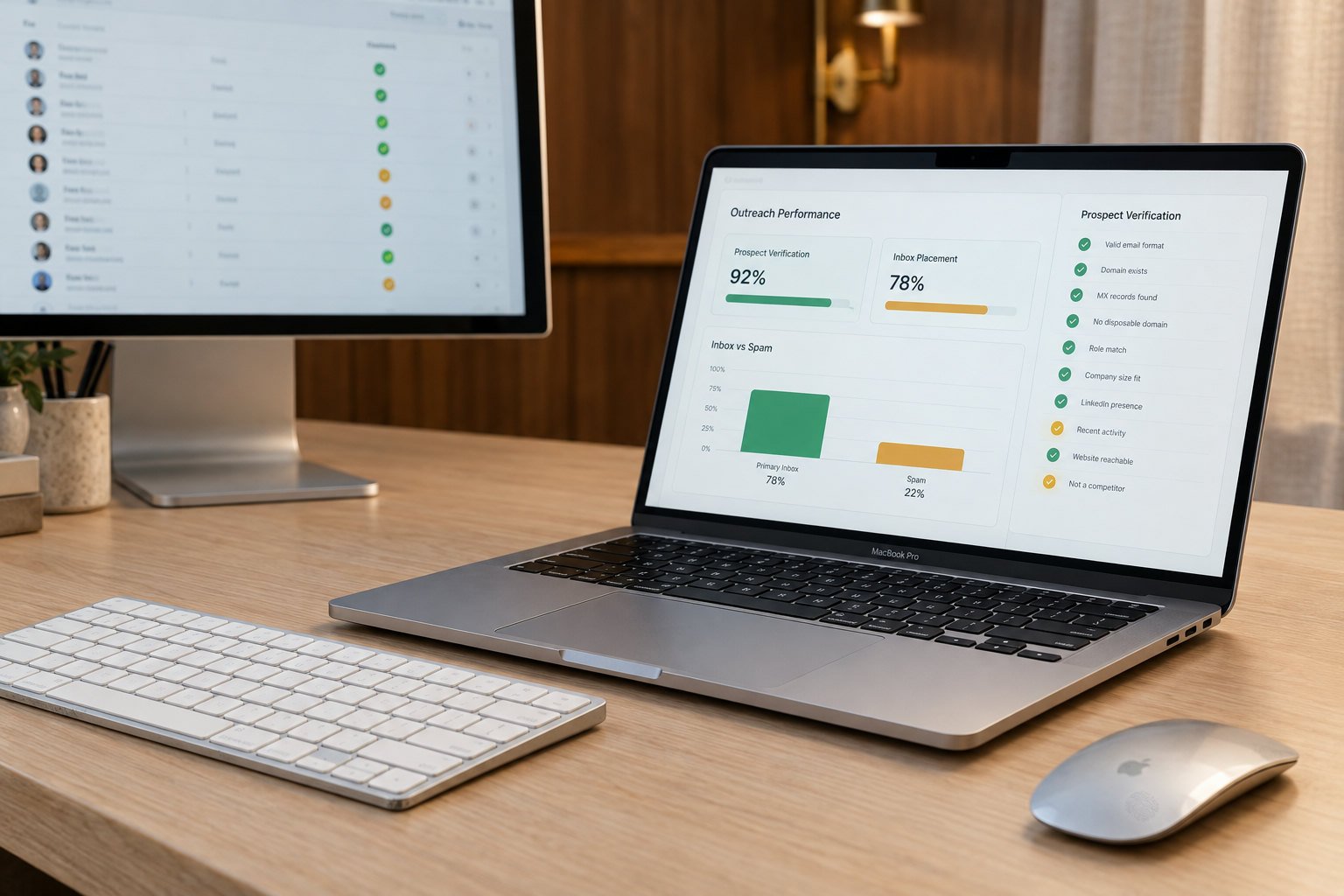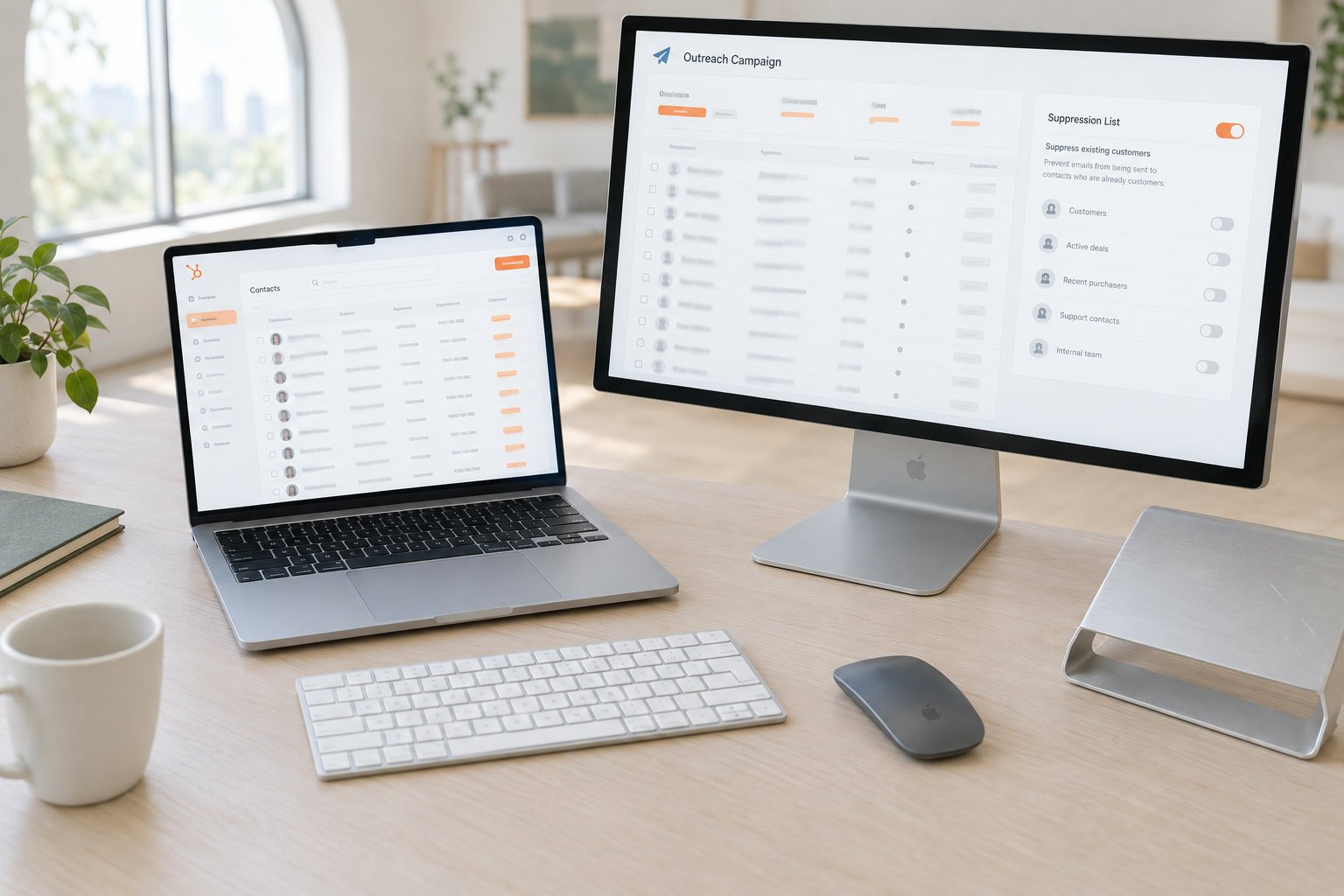


The modern B2B sales landscape demands efficiency. Companies that master B2B sales appointments through cold email systems see appointment rates jump by 40-60%, according to recent sales data. But without proper infrastructure, cold outreach becomes an expensive guessing game. This guide reveals exactly how to build, launch, and optimize a cold email system that generates qualified appointments on autopilot—without the trial-and-error waste.
Key Takeaways
- Effective B2B sales appointments via cold email require three core elements: precise audience targeting, compelling copywriting, and systematic follow-up management
- A/B testing on email copy and audience segments can increase appointment booking rates by 30-45%
- Automation handles the operational burden, but human optimization drives conversion rates
- End-to-end management—from list building through calendar booking—eliminates the friction that kills most cold email campaigns
- Companies with transparent, fixed-price structures see 3x better long-term ROI than those with hidden fees
Table of Contents
- What Are Cold Email Systems for B2B?
- Why B2B Sales Appointments Matter More Than Leads
- The Three Pillars of Successful Cold Email Systems
- Building Your Cold Email System: A Step-by-Step Process
- Optimization and Scaling Your Campaign
- Common Mistakes That Kill Cold Email Campaigns
- Frequently Asked Questions
What Are Cold Email Systems for B2B?
A cold email system is an automated infrastructure that identifies prospects, delivers personalized outreach at scale, and nurtures responses into scheduled appointments. It’s not spam—it’s a structured process designed to cut through noise and reach decision-makers with genuine relevance.
Unlike traditional cold calling or random LinkedIn messages, a professional cold email system combines database intelligence, copywriting strategy, and CRM automation to create an efficient sales machine. The best systems require minimal hands-on management once established, which is why we call it “autopilot” mode.
The core difference between a mediocre cold email effort and a high-performing system is systematization. Random emails sent sporadically don’t work. But a coordinated process—with targeted lists, tested messaging, consistent sending patterns, and intelligent follow-up—generates predictable, scalable revenue.
Why B2B Sales Appointments Matter More Than Leads
Most companies focus on lead quantity. They measure success by how many contacts they reach. But this is backward thinking that wastes budget.
The real metric that drives revenue is qualified sales appointments—conversations with decision-makers who have genuine interest and buying authority. A single high-quality appointment with a decision-maker is worth 100 cold leads that go nowhere.
Here’s the mathematical reality: If your cold email generates 1,000 opens, but only 10 responses, and only 2 of those responses convert to appointments, you’ve achieved a 0.2% appointment rate from opens. Now imagine optimizing your system to achieve a 1% appointment rate from opens—that’s a 5x improvement in actual sales-ready conversations.
“The difference between B2B teams that close deals and those that don’t isn’t lead volume—it’s appointment quality. One phone call with a CFO beats 500 emails to cold prospects. Your cold email system should be optimized for meetings, not mailbox volume.”
When you focus on B2B sales appointments via cold email, you’re aligning your effort with actual revenue outcomes. You’re measuring what matters: real conversations that move deals forward.
The Three Pillars of Successful Cold Email Systems
Every high-performing cold email system rests on three non-negotiable foundations: precision targeting, magnetic copy, and intelligent follow-up. Miss any one, and your results plummet.
Pillar 1: Precision Targeting (Your Ideal Client Profile)
Cold email only works when you’re reaching the right people. Precision targeting starts with a crystal-clear Ideal Client Profile (ICP)—a detailed definition of the exact company characteristics, roles, and situations where your solution delivers the most value.
A vague ICP (“anyone in marketing”) produces a 0.3% response rate. A precise ICP (“VP of Marketing at B2B SaaS companies with $10-50M ARR, currently using HubSpot, in tech hubs”) produces a 2-4% response rate.
Your ICP should define:
- Company Size & Revenue: Target companies where your solution fits their stage and budget
- Industry & Vertical: Specific sectors where you’ve proven success
- Decision-Maker Roles: Which titles have both authority and pain points you solve
- Technology Stack: Tools they’re currently using that indicate readiness for your solution
- Growth Signals: Recent funding, job postings, leadership changes that signal pain or priority
- Geographic Focus: Regions where you have operational capacity or cultural fit
Once your ICP is defined, your lead list becomes a targeted subset of the market—not random cold outreach, but strategic prospecting of your ideal customers.
Pillar 2: Magnetic Email Copy
The second pillar is your email script—the message that makes prospects want to respond. This isn’t about being clever or funny. It’s about relevance and clarity.
High-converting cold email scripts share four characteristics:
- Personalization at scale: Reference something specific about their company, role, or recent activity—not just their first name
- Problem-focused opening: Start with a specific challenge you know they face, not your product
- Social proof embedded: Brief mention of similar customers or results (without sounding like a sales pitch)
- Clear, single CTA: Ask for a specific 15-minute call, not vague “let’s connect” language
Pillar 3: Systematic Follow-Up & Response Management
Most cold email campaigns fail in the follow-up phase. A single email generates a 2-3% response rate at best. But a coordinated follow-up sequence—with 5-7 touchpoints spaced strategically over 2-3 weeks—can push response rates to 8-15%.
Follow-up emails should:
- Add new information or a different angle (don’t just resend the first email)
- Space sends 3-5 days apart to avoid spam folder triggers
- Gradually increase urgency or social proof as the sequence progresses
- End with a polite exit offer (“if this isn’t relevant, just let me know”)
But follow-up is only half the battle. The other half is response management—when prospects reply with interest, you need immediate, strategic follow-up to book the appointment. This is where many campaigns lose momentum: a slow response kills appointment bookings cold.
Building Your Cold Email System: A Step-by-Step Process
Now that you understand the three pillars, let’s walk through the exact process of building a cold email system that generates B2B sales appointments on autopilot.
Step 1: Deep Dive Analysis (Understanding Your Business)
Before you write a single email or pull a single lead list, you need clarity on your business positioning. This means honest assessment of:
- Your unique value proposition: What do you do that competitors don’t? (Or what do you do better?)
- Your sales offering: Product features, pricing tiers, contract terms that shape who you can serve
- Customer success stories: Case studies, metrics, and specific results you’ve delivered
- Your ideal outcome: What does success look like for prospects after they work with you?
- Competitive landscape: How prospects perceive you versus alternatives
This analysis becomes the foundation for your ICP and messaging. Without it, your emails will sound generic and generic doesn’t convert.
Step 2: Build Your Ideal Client Profile (ICP)
Using the framework from Pillar 1, define your ICP with specificity. Don’t say “B2B companies.” Say “SaaS companies with $10-100M ARR in the martech or sales automation space, whose VP of Sales or Chief Revenue Officer recently joined or expanded their team.”
This specificity feeds your lead list generation. The more specific your ICP, the higher your response rates, because you’re reaching people whose pain points match your solution precisely.
Step 3: Build Your Lead List
With your ICP locked, you build a targeted lead list using data platforms like LinkedIn Sales Navigator, Apollo, Hunter, or ZoomInfo. These tools let you filter companies and contacts by company size, industry, role, location, and technology stack.
The quality of your list determines everything. A list of 1,000 precisely targeted prospects will outperform a list of 10,000 loosely targeted ones by 10-20x.
Your lead list should include:
- Company name, industry, size, and recent funding (if relevant)
- Prospect first and last name, job title, company email
- LinkedIn profile (for personalization research)
- Any growth signals or recent changes (new hires, funding, product launches)
Step 4: Craft Your Email Scripts
Now comes the copywriting. You’ll typically create 2-3 email script variants to A/B test. Each should follow the four principles outlined above: personalization, problem-focus, social proof, and clear CTA.
Here’s a template structure that works:
Subject: [Curiosity hook or specific reference]
Hi [First Name],
[Observation about their company/role that shows research]—and I noticed [specific challenge they likely face].
[One-sentence explanation of how you help].
[Brief social proof: similar company, specific result, or relevant credential].
Worth a quick 15-minute call to explore if this could apply to [Company]?
[Your name]
Keep it short (75-100 words max). Cold email is not the place for detailed explanations. You’re earning a conversation, not closing a deal via email.
Step 5: Set Up Your Sending Infrastructure
You need three technical components: an email sending platform, CRM integration, and calendar scheduling.
Email Sending Platform: Tools like Mailchimp, Klaviyo, or specialized cold email platforms (Lemlist, Outreach) let you send personalized emails at scale. They handle deliverability, tracking, and automation sequences.
CRM Integration: Your CRM (HubSpot, Salesforce, Pipedrive) tracks responses, logs outreach, and maintains relationship history. Integration between your email platform and CRM ensures data flows automatically.
Calendar Scheduling: Tools like Calendly or built-in CRM scheduling let prospects book time directly, reducing back-and-forth.
Step 6: Launch Your Campaign with A/B Testing
Once everything is set up, launch with your first email script to 20-30% of your list. Monitor opens, clicks, and responses for 1-2 weeks, then send variant #2 to another 20-30%. This A/B testing reveals which subject lines, openings, and CTAs resonate most.
After 2 weeks, you’ll have enough data to see winning variations. Roll out your highest-performing script to the remaining list.
Step 7: Manage Responses & Book Appointments
As responses come in, they need immediate attention. A response sitting unanswered for 4 hours loses momentum. Your system needs either rapid manual response or intelligent automation (AI-powered reply suggestions).
The best cold email systems manage this end-to-end—your team handles strategy and relationship building, while the system handles follow-ups, calendar syncing, and appointment logging. This frees you to focus on closing deals rather than email logistics.
Optimization and Scaling Your Campaign
Once your initial campaign is running, the real work is optimization. Small improvements in conversion rates compound into massive revenue gains.
Metric 1: Open Rate (Optimize Your Subject Line)
Your open rate tells you how well your subject line performs. Benchmarks vary by industry, but aim for 25-35% open rates for targeted cold email.
Test variations:
- Curiosity-driven (“One thing we noticed…”)
- Specific benefit (“Cut your lead cost by 40%”)
- Reference-based (“Quick note from [Mutual Contact]”)
- Question format (“How is [Company] planning to scale revenue?”)
Metric 2: Response Rate (Optimize Your Copy)
Once opened, can prospects understand your value in 30 seconds? A 2-5% response rate is solid; 5-8% is excellent for targeted campaigns.
If your response rate is low:
- Make the first sentence more specific (not generic benefits)
- Add stronger social proof (concrete results, not vague claims)
- Clarify your CTA (some prospects are confused about what you’re asking)
- Reconsider your list (maybe your ICP definition is off)
Metric 3: Appointment Rate (Optimize Your Follow-Up)
Not all responses lead to appointments. Some are polite declines, some are “send me info,” some are genuine interest. Your follow-up sequence should identify genuine interest and convert it to a calendar booking.
Track your “response to appointment” conversion rate separately from “email sent to appointment.” If 100 people respond but only 5 book calls, your follow-up is weak. Improve your response management process.
| Metric | Poor Performance | Average Performance | Excellent Performance |
|---|---|---|---|
| Open Rate | <15% | 20-28% | 30%+ |
| Response Rate | <1% | 2-4% | 5%+ |
| Appointment Rate (of responses) | <20% | 30-50% | 60%+ |
| Overall Email to Appointment | 0.2% | 0.6-1.5% | 2-3% |
Scaling to Multiple Campaigns
Once you’ve proven your model with one campaign, scale by:
- Expanding your list: Target adjacent ICPs within your proven winner profile
- Testing new angles: Create variations that speak to different buyer personas or use cases
- Increasing send volume: Once metrics stabilize, send to larger lists with proven copy
- Building nurture sequences: For “not now” responses, create 3-6 month follow-up sequences
Scaling doesn’t mean blindly increasing volume. It means intelligently expanding what works.
Common Mistakes That Kill Cold Email Campaigns
Even with the best strategy, execution errors kill results. Here are the most common pitfalls:
Mistake 1: Vague Targeting
Sending to “anyone in marketing” or “all tech companies” guarantees poor results. Your list quality determines everything. Spend time building a precise ICP before you pull a single lead.
Mistake 2: Generic, Product-Focused Copy
Prospects don’t care about your features. They care about their problems and how you solve them. If your email reads like a brochure, it will be deleted. Lead with their pain, not your product.
Mistake 3: Insufficient Follow-Up
Sending one email and expecting results is naive. Build a 5-7 email sequence spaced across 2-3 weeks. Most responses come after the third or fourth touch.
Mistake 4: Slow Response Time
A response that sits unanswered for hours loses momentum. Aim to reply to interested prospects within 30 minutes. Automation can help here, but human follow-up is crucial.
Mistake 5: No A/B Testing or Optimization
Running the same campaign repeatedly without testing variations wastes potential. Continuously test subject lines, openings, social proof, and CTAs. Small improvements (5-10%) in conversion rates compound into massive revenue gains.
Mistake 6: Relying on Manual Processes
If your system requires manual data entry, manual follow-up, and manual CRM logging, it’s not autopilot. Automation—from email sending to response logging to calendar booking—is what separates scalable systems from labor-intensive ones.
Why Full-Service Management Delivers Better Results
Building a B2B sales appointments cold email system internally is possible but resource-intensive. You need expertise in copywriting, data sourcing, CRM setup, automation, and analytics. You need infrastructure and tools. And you need continuous optimization.
Many companies attempt this internally and achieve mediocre results because they lack one critical component—usually either targeting precision or copy quality or follow-up management.
Professional lead generation services with 10+ years of sales expertise handle the entire workflow: deep-dive analysis of your business, precise audience targeting, compelling copywriting, full automation setup, A/B testing, response management, and calendar booking. This end-to-end approach produces 2-3x better appointment rates than DIY efforts.
The best part? Transparent, agreed-upon pricing with no hidden fees means you know exactly what you’re paying—and your budget is predictable month to month. No surprises, no contract lock-ins.
Frequently Asked Questions
How long does it take to see results from a cold email system?
Most campaigns start generating responses within 1-2 weeks of launch, with ramping results over 4-6 weeks as your follow-up sequences run their course. Full optimization (with A/B testing and scaling) typically takes 8-12 weeks before you see truly predictable, stable appointment volumes. Patience and data-driven iteration are key.
What’s the average cost per appointment from a cold email campaign?
Cost per appointment depends on your list size, campaign duration, and tool costs, but typically ranges $25-75 per qualified appointment for in-house efforts. Professional services are higher per appointment ($100-250+) but generate 2-3x more appointments from the same effort, making the true cost per closed deal much lower. The real metric isn’t cost per appointment—it’s revenue per appointment, which is where professional systems shine.
Is cold email considered spam? Will it damage my brand?
Cold email is not spam when done professionally: proper permission-based sending infrastructure, authentic personalization, clear opt-out options, and sending to genuinely targeted prospects who fit your ICP. When done poorly—blasting random lists with generic messages—it is spam. Professional cold email systems prioritize brand reputation by focusing on relevance and genuine outreach, not volume.
What tools and platforms do I need to run a cold email system?
Core tools include: an email platform (specialized cold email tools like Lemlist or Outreach, or mass email platforms like HubSpot), a CRM (Salesforce, HubSpot, Pipedrive) for tracking, a list-building tool (Apollo, Hunter, ZoomInfo), and calendar scheduling software (Calendly or CRM-native). The best systems integrate these seamlessly so data flows automatically without manual work. Many all-in-one platforms now combine email, CRM, and automation in one dashboard.

- How Best Leads Builds Cold Email Systems That Generate B2B Sales Appointments on Autopilot
- How To Generate B2B Sales Appointments on Autopilot With Cold Email Outreach
- How to Get B2B Sales Meetings Booked Directly on Your Calendar With Cold Email Outreach
- B2B Sales Appointments on Autopilot: What Actually Makes Cold Emails Get Replies
- How To Book More Sales Appointments Using Cold Email Automation
This article was drafted with AI assistance to ensure factual accuracy.