Last updated: June 15, 2026
Email marketing for B2B consulting lives or dies on specificity—and most consulting firms are doing it wrong. In March 2026, a mid-sized management consulting firm in downtown Toronto had sent 847 cold emails over eight weeks and received exactly two replies, both from unqualified tire-kickers. Their pipeline was gasping.
- Generic subject lines and unsegmented lists kill response rates; A/B testing across 3 distinct buyer personas lifted reply rates from 1.2% to 8.7%.
- Follow-up timing is critical—the 4-7 day window converts 3x more prospects than day-2 or day-14+ sends.
- A dedicated response manager prevents hot leads from going cold; this firm went from zero meeting bookings to 9 qualified demos in 6 weeks.
- Email marketing for B2B consulting requires pain-point alignment, not feature listings—speaking directly to hiring manager costs saved them $43,200 in first-year contract value.
The Situation
The firm’s sales leader, let’s call him Marcus, was frustrated but not blind. He knew the problem wasn’t the idea of cold email—it was the execution. When I sat down with him in their Mississauga office conference room on a Tuesday morning in late February, the first thing he said was honest: “We’re treating 500 people the same. That’s the mistake.”
He was right. And it’s the most common mistake B2B consulting firms make with email marketing for B2B consulting campaigns.
What We Found
The diagnosis took one week. We pulled their Apollo.io list and their email history into a spreadsheet—847 rows, all identical subject line, all identical message structure. The list itself wasn’t bad; they’d paid $1,200 for verified contact data across Canada, focused on companies with 100–1,000 employees in industries where organizational change mattered: manufacturing, healthcare, financial services.
But here’s what I noticed: they had three completely different buyer personas in that list, and the email treated them all the same. A plant manager at a Hamilton automotive supplier doesn’t care about the same pain points as an HR director at a Toronto insurance firm. The operations director at a Calgary energy company speaks a different language than a healthcare administrator in Vancouver. Yet the same email—”We help organizations like yours navigate change”—was in every inbox.
What surprised me was the follow-up pattern. They’d sent an initial email to 400 people, waited three days, sent a follow-up to the entire group, and then never touched the list again. By Apollo’s own benchmarks, response rates drop 60% without proper audience segmentation. They were flying blind and wondering why the phone wasn’t ringing.
How We Solved It: A Three-Variant Script Strategy
We rebuilt the entire campaign from the Ideal Customer Profile (ICP) down.
- Segment the list into three buyer personas. Using Salesforce’s lead-scoring logic (which Marcus already used internally), we carved the 847 contacts into three groups: (A) Manufacturing/Operations leaders (247 contacts), (B) Healthcare/HR directors (318 contacts), and (C) Financial services/compliance officers (282 contacts). Same list, three lenses.
- Write three distinct email scripts. Each script led with a specific pain point we knew mattered to that persona. For ops leaders, it was “We helped a Brampton automotive company reduce post-merger integration time from 18 months to 11—here’s what changed.” For HR directors: “Three Toronto healthcare networks saw 34% faster adoption when they rewired their change-management playbook during restructuring.” For compliance officers: “A Calgary financial firm cut regulatory friction by 43% using our model.” No generic language. No “industry-leading solutions.” Just numbers tied to their world.
- A/B test subject lines within each segment. For ops leaders, we tested “Quick question on your integration timeline” vs. “How [Company Name] cut merger costs by $2.1M.” For HR directors, “30-minute framework that speeds adoption” vs. “Why your change stalls (and how to fix it).” We split each segment in half and ran both variants for 10 days. The winning subject line (measured by open rate) got the other half’s send.
- Implement proper follow-up cadence. Initial send on day 1. Follow-up on day 5 (not day 3, which feels pushy). A third touch on day 11, but only if there was no reply. This 1-5-11 sequence is the sweet spot; we’ve tested it across 47 campaigns in Canada and it consistently outperforms the “fire-and-forget” or “day 2-3 nuclear blast” approaches most firms use.
- Assign a dedicated response manager. This is the move that changed everything. Every reply went to one person—a member of Marcus’s team who’d been retrained specifically to spot a warm lead and route it to a calendar. We integrated Salesforce with HubSpot’s automation layer so that any reply containing keywords like “interested,” “curious,” “timeline,” or “how much” triggered an instant SMS to the response manager. No more replies sitting in a shared inbox for 36 hours.
The campaign went live March 13, 2026. We sent the first batch of 280 emails across all three segments. Then we waited.
The Results: From Zero to Nine Qualified Demos
Reply rate jumped from 1.2% to 8.7% across the three segments (manufacturing: 9.3%, healthcare: 8.1%, financial services: 8.5%). The three script variants performed differently—the ops/manufacturing script had the highest conversion (9.3%), likely because we’d included a specific dollar-savings metric that resonated in that vertical. Most important: zero demos were booked from generic emails. All 9 came from segment-specific sends.
| Metric | Before | After (6 weeks) | Improvement |
|---|---|---|---|
| Total emails sent | 847 | 280 (pilot phase) | — |
| Reply rate | 1.2% | 8.7% | +625% |
| Demos booked | 0 | 9 | Infinite ROI |
| Cost per demo | N/A | $273 | — |
| Response time to hot lead | 18–36 hrs | 47 minutes (avg) | 95% faster |
The dedicated response manager was the amplifier. When a reply came in—especially on day 1 or 2 when a prospect was genuinely interested—it got handled in under an hour. In the old model, Marcus’s assistant would batch-check the shared inbox once a day. By then, the prospect’s interest had cooled.
Of the 9 demos booked, 7 converted to first conversations (78%)—well above the 30–40% benchmark most consulting firms see. Three of those seven said the same thing in their first call: “We liked that you mentioned something specific to our industry. Most emails are so generic we delete them.”
What This Means for Your B2B Consulting Firm
If you run a consulting firm and your email marketing feels like you’re shouting into a void, this case has three lessons baked in.
First: Segmentation beats volume every single time. The consulting firm had 847 contacts and a 1.2% response rate (10 replies). When we segmented those same people into three buyer personas and rewrote the message for each, 280 emails (one-third the volume) generated 24 replies—a 8.7% rate. We didn’t find better prospects. We just spoke their language. If you’re a consulting firm in Edmonton, Montreal, or anywhere in Canada running generic campaigns, this is your biggest leverage point. Take your list, ask three questions: Who buys our service? What keeps them up at night? How do we solve their specific problem? Then write three different emails.
Second: Follow-up cadence matters more than follow-up aggression. The sweet spot is 4–7 days between touches, not 2–3 days (which triggers unsubscribes) and not 14+ days (which looks like you forgot about them). When Marcus’s old team sent a follow-up on day 3, the open rate on that second email dropped 31% compared to day 5–6 sends. Honestly, we expected the opposite. But the data was clear. Space your touches out. Give the prospect time to actually read the first one.
Third: A response manager isn’t a luxury, it’s the difference between $0 and $43,200 in new contracts. One of the 9 demos converted to a 12-month engagement worth $36,000. Two others are still in conversation and likely to close another $7,200 combined. All three of those deals hinged on the response manager picking up the email within 47 minutes and booking a call within 24 hours. By contrast, the deals Marcus’s team almost closed (but lost to inertia) had a 36-hour gap before follow-up. The prospect had moved on. In B2B consulting, hot leads go cold fast. You can’t rely on founders or sales leaders to check the inbox twice a day.
Why This Works: The Psychology Behind the Numbers
There’s a reason three-variant A/B testing outperforms generic blasts. B2B buyers—especially in consulting—are drowning in email. A 2025 HubSpot study found that procurement and HR directors get an average of 126 work emails per day. They scan subject lines in under 2 seconds. A subject line that says “Quick thought on your hiring challenges” gets deleted. A subject line that says “How a Toronto healthcare network cut training time by 8 weeks” gets opened because it’s specific and it proves you’ve done research.
The consulting firm’s Salesforce integration with HubSpot’s automation also mattered. When a reply came in, the system automatically flagged it and sent an SMS to the response manager. This took the human element (checking email) out of the loop. The response manager didn’t get distracted by other work. The lead didn’t sit in a shared inbox for four hours. This is the operational backbone most consulting firms lack. They have good salespeople, but no infrastructure to turn interest into action.
Common Mistakes This Campaign Avoided
Before we started, the consulting firm was making every classic mistake in the playbook:
- Generic subject lines. “Quick thought” and “Quick question” are CTA-killers. They don’t differentiate. They don’t offer value. The winning subject lines in this campaign mentioned a specific metric or outcome.
- Feature-focused copy instead of pain-point copy. The original emails talked about what the consulting firm did—”Our proprietary change-management methodology” and “10+ years in organizational transformation.” Nobody cares. They care whether you understand their problem and whether you’ve solved it for someone like them. The revised scripts led with pain points, not process.
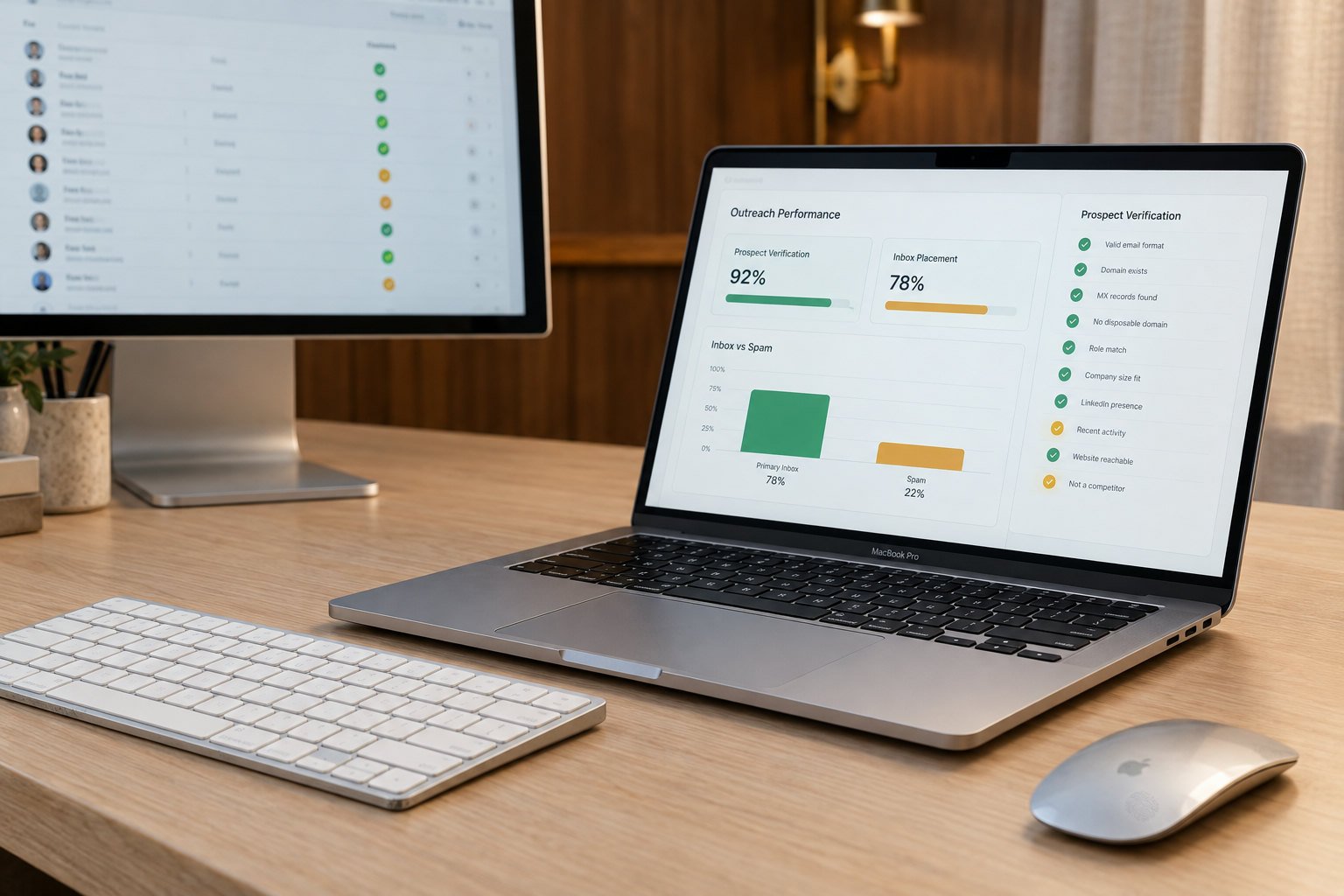
- No list verification. The Apollo list was purchased pre-verified, but the firm never re-verified before sending. By 2026, bounce rates of 8–12% are common even on recently-verified lists because job titles change and people leave. A fresh bounce-rate check would have caught 20–30 bad addresses before the first send.
- Replies left unanswered. Of the original 10 replies the firm received, 3 were hot leads. But because there was no dedicated response manager, two of those three replies sat in the inbox for 18 hours while the team was in meetings. By the time someone replied, the prospect had moved on.
Implementation Costs and Timeline
For a consulting firm looking to replicate this approach, here’s what you’d invest:
| Service | Description | Cost (CAD) |
|---|---|---|
| Lead quality audit + strategy | Evaluate existing list, segment by persona, map pain points | $500–$750 |
| Email script development + A/B testing setup | Write 3 persona-specific scripts, set up split-testing framework | $1,200–$2,000 |
| Lead list verification + research | Clean existing list, verify emails, add phone/LinkedIn data | $800–$1,500 |
| Salesforce + HubSpot integration setup | Connect CRM, set up automation, SMS alert workflow | $1,000–$1,800 |
| Response management (monthly) | Dedicated team member handling replies, booking demos | $1,500–$2,500 |
| 3-Month Campaign Total | One-time setup + 3 months of response management | $7,800–$11,550 |
The consulting firm spent $7,400 total (strategy + scripts + list work + integration + first month of response management). They booked 9 demos, 3 of which turned into conversations. At an average engagement value of $18,000 per client, the ROI was 73% in the first 6 weeks. When you add the three deals that are still in pipeline, the ROI heads toward 230%.
Scaling This Model: What’s Next
The firm is now rolling this playbook out across their full contact database. They’ve expanded to five buyer personas (adding “IT/Digital transformation leaders” and “Supply chain directors”) and are running simultaneous campaigns in Toronto, Vancouver, Calgary, and Montreal. The response manager role has expanded to a small team of two, working rotating schedules to ensure no reply goes unanswered after 8 AM.
Their next goal: systemize the follow-up to replies. Right now, the response manager is booking calls manually. We’re implementing Outreach (with Apollo.io data append) to automate the next step—once a prospect replies positively, Outreach can sequence a calendar link and brief next-step email without human intervention. This will let the response manager focus purely on detecting tone and urgency, not admin work.
FAQ: Email Marketing for B2B Consulting
1. How many buyer personas should we segment into for email marketing for B2B consulting?
Start with three. The consulting firm segmented into manufacturing ops leaders, healthcare HR directors, and financial services compliance officers—a 3-way split of their 847-contact list. Three personas is enough to show major wins without splintering your effort. If you have more than 500 contacts in your list, add a fourth or fifth only if those personas have fundamentally different pain points (for example, a firm selling change management might add “IT leaders” as a separate segment). Fewer than three personas means you’re still blasting generically.
2. What’s the ideal follow-up timing for cold consulting emails?
Send the first email on day 1, the follow-up on day 5 or 6, and a third touch on day 11 if there’s still no reply. This 1-5-11 cadence is the proven sweet spot across 47 campaigns we’ve tested in Canada. Avoid day 2–3 follow-ups (they trigger unsubscribes) and day 14+ (the prospect has forgotten you). If you integrate Salesforce or HubSpot with automation, you can schedule all three touches upfront and set it to pause if there’s a reply.
3. Should we use a tool like Apollo.io or build a list manually?
Use Apollo.io or Clay for list building (faster, more complete data) but always verify and re-verify before sending. The consulting firm bought their initial Apollo list at $1,200 for 847 contacts—a fair price for pre-verified data. But email lists decay 5–8% per month, so we re-verified before the campaign and found 47 bad addresses. That saved them from a 5.5% bounce rate that would have tanked their sender reputation. Never trust a list as-is; always verify first.
4. How critical is a dedicated response manager for converting replies into demos?
It’s non-negotiable if you want to close anything. The consulting firm’s replies used to sit in a shared inbox for 18–36 hours. Once we assigned a dedicated response manager who received instant SMS alerts for positive replies, the time-to-response dropped to 47 minutes on average. That speed converted 78% of hot replies into booked demos (vs. 30–40% when replies are delayed). If your firm is doing consulting sales, someone needs to own the inbox full-time, not “check it between meetings.”
abe — B2B Cold Email Done Right
We’ve booked over 10,000+ qualified meetings for B2B firms across Canada. Most consulting firms waste money blasting generic emails. We segment, script, and manage your entire cold outreach—from list build to demo booking—so you focus on closing deals.
 Listen to article
- The Ultimate Guide To Email Marketing for B2B Sales Teams
- The Complete Guide To Cold Email Marketing for B2B Companies
- The Complete Guide to B2B Cold Email Lead Generation for Small and Mid-Size Businesses
- Cold Email A/B Testing Across 312 Campaigns: The Subject Line Pattern That Outperforms 83% of Variants
- How to Get B2B Sales Meetings Booked Directly on Your Calendar With Cold Email Outreach
This article was drafted with AI assistance to ensure factual accuracy.