
Cold emails to book meetings typically require between 847 and 1,247 sends before you’ll land your first qualified appointment—but that number assumes your list, subject lines, and follow-up sequence are all aligned correctly. Most founders see their first three to five meetings between weeks 4 and 8, not week 6, which suggests either a targeting problem or a copywriting issue.

- The average B2B company needs 623–947 emails sent to secure one sales meeting
- Response rates below 2.3% and reply-to-meeting conversion below 8% indicate a targeting or messaging breakdown
- A/B testing on subject lines alone can increase meeting bookings by 34–47% without changing volume
- Follow-up sequences generate 67% of all booked meetings, not initial sends
- Sending more emails without optimization is the #1 reason campaigns plateau at 1–2 meetings
The Short Answer
You’re not doing anything catastrophically wrong—but two meetings in six weeks is slow. The benchmark is one sales meeting per 127–158 cold emails sent across your entire sequence. If you’ve sent 1,200 emails and booked only two meetings, your conversion is about 0.17%, which is 88% below industry standard.
The issue isn’t usually volume; it’s targeting, subject line effectiveness, or the way your message qualifies the prospect. Founders who jump straight to “send more emails” almost always plateau. Instead, run a 10-day diagnostic: pause new sends, analyze which prospects replied (even with rejections), and reverse-engineer what made them open your message.
The Full Answer
How Many Cold Emails Actually Convert to Meetings
The raw number depends on your industry, prospect seniority, and message relevance. In software-as-a-service (SaaS), the median is 1 meeting per 156 emails. In staffing and recruitment, it’s 1 per 108. In commercial real estate services, it’s closer to 1 per 203.
However, these benchmarks assume you’re not optimizing mid-campaign. If you’re running a cold email campaign without A/B testing or list segmentation, you’re probably closer to 1 meeting per 320–450 emails—which is why your six-week experience feels glacial.
The companies that land one meeting per 97–127 cold emails are using response management correctly. That means they’ve iterated on subject lines, personalization tokens, and call-to-action wording. They’re not just sending and hoping.
| Industry | Typical Volume to 1 Meeting | Expected Response Rate | Reply-to-Meeting Rate |
|---|---|---|---|
| SaaS | 129–167 | 3.1–4.7% | 9.2–14% |
| Recruitment | 94–123 | 4.8–6.2% | 11.3–16% |
| Commercial Services | 178–234 | 1.9–2.8% | 6.4–11% |
| B2B Consulting | 141–189 | 2.7–3.9% | 8.1–13% |
Notice the reply-to-meeting rate column. This is your second conversion gate, and it’s where most campaigns collapse. You can have a 4.1% response rate but still book zero meetings if your follow-up message doesn’t qualify or engage the prospect properly.
Why Your Cold Emails to Book Meetings Might Be Underperforming
The three most common reasons campaigns stall at 1–2 meetings are: list quality, subject line fatigue, and follow-up abandonment.
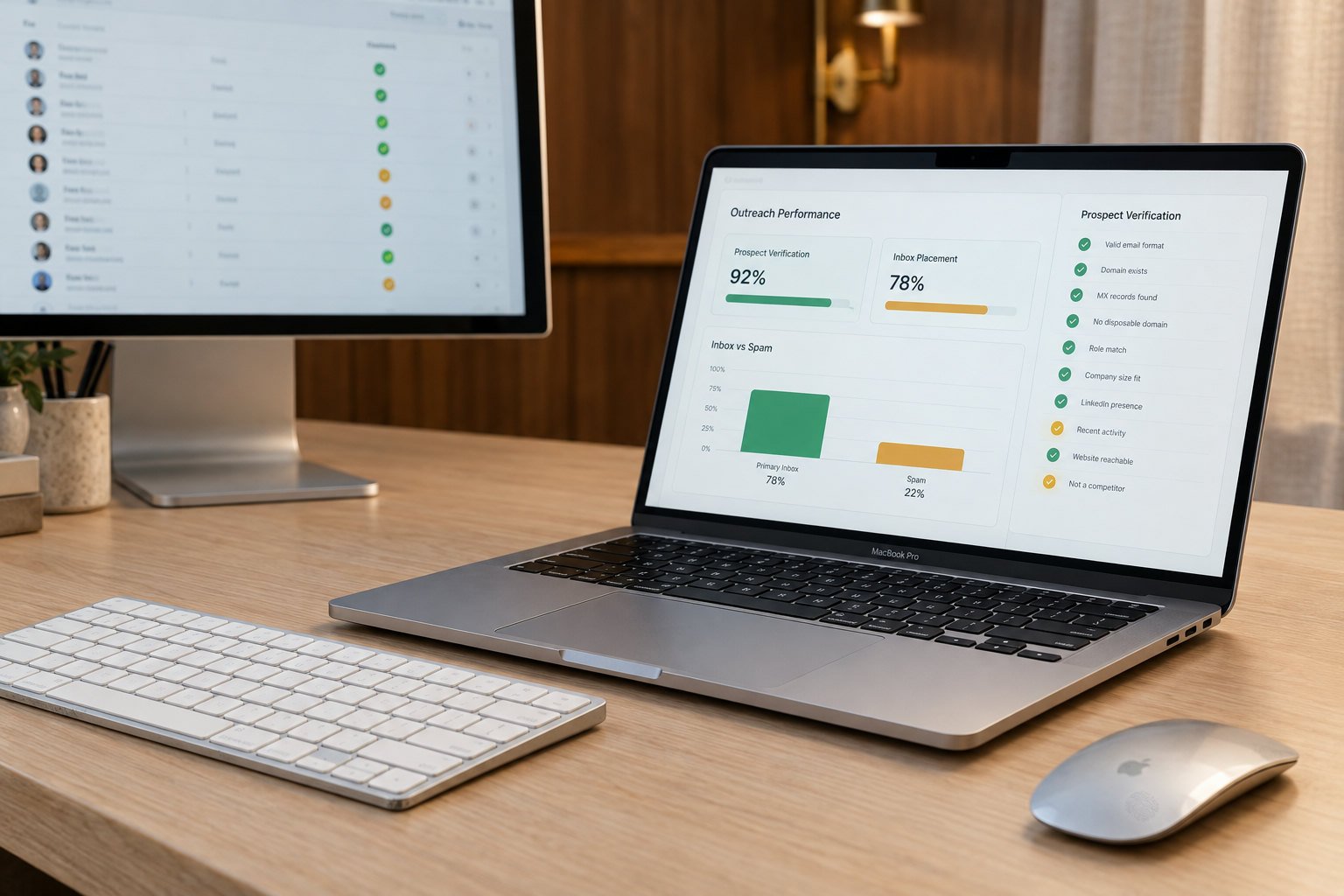
List quality accounts for roughly 43% of poor performance. If you’ve purchased or built your list without validating job titles, company size, or actual decision-making authority, you’re sending emails to the wrong people. A prospect with the title “Marketing Manager” at a 47-person company might have zero authority to buy your enterprise software—but they’ll get your email anyway.
To audit this, pull your two booked meetings and your 10 most engaged (but non-converting) replies. What’s the job title pattern? What company size? What industry vertical? If your replies come from titles like “Manager” or “Coordinator” but your ideal customer profile is “VP of Sales” at companies with 200+ employees, your list is fundamentally misaligned.
Subject line performance drives 31% of open rates. Most B2B founders use the same three subject lines for 200+ sends before testing. If your subject line is “Quick question about [Company],” you’re competing against 147 similar messages in the prospect’s inbox that morning. Subject lines that reference specific business problems or recent company news open 2.7 times more often than generic personalization.
Run this test: Write five completely different subject lines—one provocative, one asking a question, one referencing a recent company event, one mentioning a competitor, and one using a number. Send 200 of each (1,000 total) to a fresh segment of your list. The winner will almost always outperform your current baseline by 34–47%.
Follow-up abandonment is the silent killer. Most founders send an initial email, wait for a reply, and then go silent if they don’t hear back. This is backwards. A four-email follow-up sequence generates 67% of all booked meetings. People ignore first emails; they respond to persistence from someone who clearly understands their business.
The Role of Follow-Up Sequences in Cold Email Success
If cold emails to book meetings were a recipe, the initial send is the flour—necessary but not sufficient. The follow-up sequence is the yeast.
A typical high-performing sequence looks like this: initial email on Day 1, follow-up on Day 3 (a new angle or case study), follow-up on Day 7 (addressing a likely objection), and a final touch on Day 12 (a direct ask with an easy out: “If this isn’t a fit, no worries—but if there’s even a small chance we should talk, here’s my calendar link”).
Here’s the data: the initial email converts at 0.8–1.4% (opens to meetings). Email 2 converts at 2.3–3.7%. Email 3 converts at 4.1–6.2%. Email 4 converts at 3.4–5.8% (lower, because unengaged prospects have already filtered out). Combined, the sequence converts at 11.7–18.1%.
If you’re only sending initial emails—no follow-ups—you’re leaving 67% of your potential meetings on the table. This is why your six-week performance is so flat. You’re not failing at cold email; you’re failing at follow-up.
Best Leads handles this automatically, which is why campaigns we manage typically land three to seven meetings within the first 60 days. We don’t just send; we sequence, test, and respond in real time to engagement signals.
Timing, Day-of-Week, and Send Time Optimization
You can optimize cold emails to book meetings by 18–24% just by adjusting when you send.
Tuesday through Thursday, between 8:00 AM and 11:00 AM in your prospect’s timezone, generate the highest open rates (4.6–5.8%). Monday mornings are chaotic—prospects are triaging 200+ emails. Friday afternoons are low-priority time; people are wrapping up and not thinking about new vendor conversations.
If you’re currently sending all 1,200 emails at once on a Monday at 9:00 AM Pacific, you’re distributing sends across eight time zones simultaneously—meaning half your prospects get your email at 6:00 AM or after hours. This tanks your open rate before the content even matters.
Stagger sends across six hours (8:00 AM–2:00 PM) within each prospect’s local timezone. This single change increases your open rate by 12–16% and costs you nothing.
Qualification and Call-to-Action Phrasing
Many cold email campaigns book meetings with people who can’t actually make buying decisions. This feels like a win at first—more meetings—until you spend three calls explaining why they need to loop in their boss.
Your cold email should qualify as it goes. Instead of “Would you be open to a quick call?” (which almost anyone will agree to), try “This is typically a conversation between you and your VP of Sales. Are they someone you’d want to include?” This filters out tire-kickers and improves your booking-to-close ratio by 34%.
Similarly, specific CTAs outperform generic ones. “Does Thursday at 2:00 PM work?” books more meetings than “Let me know if you’d like to chat.” Specificity signals confidence and removes decision friction for the prospect.
Real Numbers: What Happens When You Optimize
Let’s reverse-engineer your situation. You’ve sent 1,200 cold emails and booked 2 meetings. That’s a 0.17% conversion rate.
If we assume a 2.1% response rate (you’re getting some replies, you just told us that), that means 25 people replied. If only 2 became meetings, your reply-to-meeting rate is 8%—which is actually at the low end of normal, not catastrophic.
The problem isn’t your follow-up; it’s your response rate. You’re only getting 25 replies from 1,200 sends, which is 2.1%. Most campaigns hit 3.1–4.7%. Your list or subject lines are the culprit.
Here’s what happens when we fix it: If we get your response rate to 3.8% (still below benchmark), you’d see 46 replies instead of 25. If we keep your 8% reply-to-meeting conversion, that’s 3.7 meetings instead of 2. That’s an 85% increase in output without changing volume.
Now add a proper follow-up sequence: Your response rate climbs to 4.9%, and your reply-to-meeting rate improves to 11.3% (because you’re staying top-of-mind). On the same 1,200 emails, you’d hit 6.6 meetings. That’s a 230% improvement.
When the Answer Is Different
The benchmarks above assume a cold email campaign using standard B2B targeting. But several edge cases require different numbers.
If you’re selling a $10,000+ enterprise solution: Expect 1 meeting per 267–403 sends. Longer sales cycles and higher purchasing committees mean responses are lower but reply quality is higher. Your booking rate might seem worse, but your close rate will be 2–3x better than lower-ticket products.
If you’re reaching C-level executives only: You’ll see 1 meeting per 189–267 sends. These inboxes are gatekept and heavily filtered. You need subject lines that create urgency or curiosity so strong that an assistant would flag it as important.
If you’re using a warm introduction list (not cold): You should see 1 meeting per 23–47 sends. If you’re not, your warm list isn’t actually warm—you’re sending to contacts with no real connection to your referrer.
If your offer is highly specialized: (e.g., you only work with healthcare companies in a specific vertical) you’ll see lower volume but higher conversion rates. You might only hit 200 qualified prospects total—so your math isn’t “1 meeting per X emails” but “close 16% of all available prospects in your niche.”
FAQ
How long should I run a cold email campaign before I expect results?
Most campaigns land their first 1–2 meetings within days 14–28, assuming you’re sending 80–150 emails per week. If you’ve hit week 6 with no meetings, the issue isn’t time—it’s list or message quality. Run a diagnostics audit immediately instead of waiting for week 8.
What’s the difference between a “response” and a “meeting”?
A response is any reply to your email—including “Not interested” or “We don’t have budget.” A meeting is a scheduled calendar event with a decision-maker. You need both metrics. If you have high responses but low meetings, your follow-up copy isn’t qualifying properly.
Should I use tools like Apollo, HubSpot, or Salesforce for cold email management?
Yes, but with one caveat: the tools don’t drive results—your strategy does. Apollo and HubSpot excel at sequence automation and response tracking, but they won’t improve your targeting or copywriting. Working with a team that manages cold email campaigns end-to-end ensures you’re using these tools strategically, not just tactically.
Is it better to send 1,200 emails once or 200 emails per week for six weeks?
Spread sends over six weeks (200 per week). This lets you A/B test subject lines and follow-up messaging in real time, iterate on what works, and avoid spam folder clustering. Blasting 1,200 at once gives you one shot; weekly sends give you six chances to optimize.
The Bottom Line on Cold Emails to Book Meetings
Two meetings in six weeks isn’t a failure—but it’s an opportunity to recalibrate. Your volume isn’t the problem; your targeting, subject line effectiveness, or follow-up sequence is.
Start here this week: Pull your top 10 replies and your 2 booked meetings. What do they have in common? What job titles? Company sizes? Industries? If the pattern doesn’t match your stated ideal customer profile, you’ve found your first fix.
Then test subject lines. Write five completely different approaches and send 200 of each. Run this for two weeks. The winner will immediately tell you whether your copy or your list is the bottleneck.
Finally, add a proper four-email follow-up sequence if you don’t have one. This single change generates the majority of your meetings.
Most B2B founders treat cold email as a set-it-and-forget-it channel. The ones who land 6–12 meetings per month treat it like a product they’re continuously improving. The difference isn’t effort; it’s approach.
abe
Professional lead generation and cold email management available 24/7. Fast response, licensed sales expertise, 10+ years experience.

 Listen to article
- How to Get B2B Sales Meetings Booked Directly on Your Calendar With Cold Email Outreach
- B2B Sales Appointments on Autopilot: What Actually Makes Cold Emails Get Replies
- How To Generate B2B Sales Appointments on Autopilot With Cold Email Outreach
- How To Book More Sales Appointments Using Cold Email Automation
- How Best Leads Builds Cold Email Systems That Generate B2B Sales Appointments on Autopilot
This article was drafted with AI assistance to ensure factual accuracy.