<img src="https://images.pexels.com/photos/19399416/pexels-photo-19399416.jpeg?auto=compress&cs=tinysrgb&dpr=2&h=650&w=940" alt="How To Manage Cold Email Follow-Ups Without Losing Prospects” style=”width:100%;border-radius:16px;margin:20px 0;object-fit:cover”>
Mastering cold email follow-up management is the difference between a pipeline full of warm prospects and a graveyard of ignored outreach. Most sales teams send one email, hear nothing back, and move on — leaving a significant portion of their revenue on the table. This guide will show you exactly how to build, time, and automate a follow-up system that converts cold contacts into booked meetings.
- Why Most Cold Email Follow-Ups Fail
- The Optimal Timing Framework for Cold Email Follow-Up Management
- How To Structure a High-Converting Follow-Up Sequence
- Writing Follow-Up Emails That Get Replies
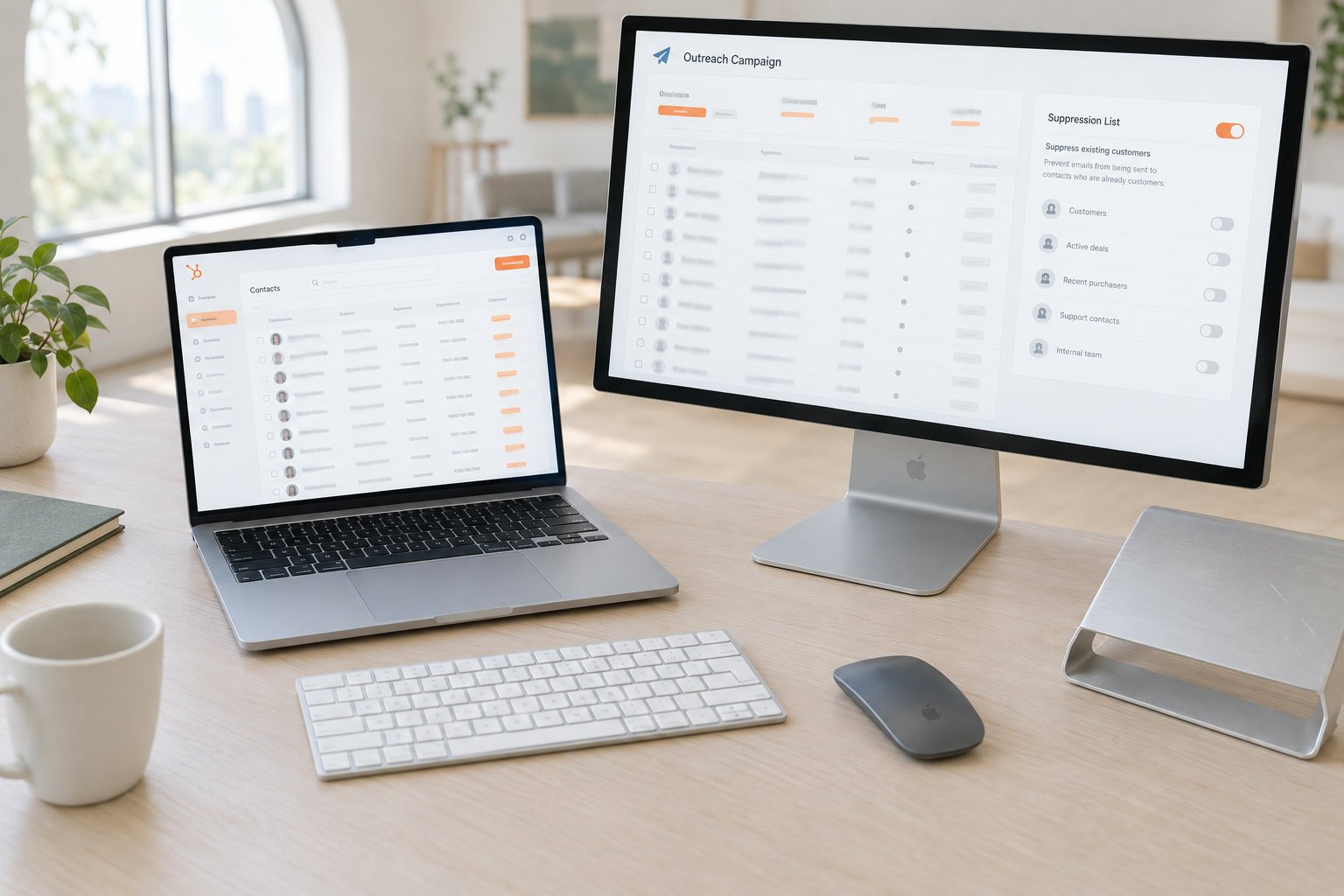
- Tools and Automation for Seamless Follow-Up Management
- Handling Responses Without Losing Momentum
- Metrics That Matter in Follow-Up Campaign Management
- Frequently Asked Questions
- 80% of sales require at least five follow-up touchpoints — most reps stop after one or two.
- Timing your follow-ups strategically (not just on a fixed interval) dramatically increases reply rates.
- Personalization beyond the first email is what separates high-performing sequences from spam.
- Automating your follow-up system with tools like HubSpot, Apollo, or Salesforce reduces manual workload by up to 70%.
- Proper response management — not just sending emails — is what ultimately fills your calendar with qualified meetings.
Why Most Cold Email Follow-Ups Fail
The cold email follow-up problem is not a volume problem. Most sales teams are sending enough emails — they’re just not sending the right emails at the right time in the right way. The result is a pipeline that looks busy but converts at a fraction of its potential.
According to research from the Rain Group, 44% of salespeople give up after just one follow-up, yet 80% of successful deals require five or more contacts. That gap is where your revenue is hiding.
Here are the most common reasons follow-up sequences collapse:
- Generic messaging: Copying and pasting the same email with a different subject line signals laziness to prospects.
- Inconsistent timing: Following up the next day after an initial email, then waiting two weeks for the third, destroys any sense of rhythm.
- No clear call to action: Vague endings like “let me know if you’re interested” produce vague responses — or none at all.
- Failure to provide new value: Each follow-up must justify its existence with fresh insight, a relevant case study, or a new angle.
- Manual processes: When follow-ups depend on a rep remembering to send them, they don’t get sent.
The Optimal Timing Framework for Cold Email Follow-Up Management
Timing is not a soft skill in cold email follow-up management — it is an engineering decision. Send too soon and you look desperate. Wait too long and the prospect has mentally moved on. The sweet spot is a carefully spaced cadence that respects attention while maintaining presence.
The Proven 7-Touch Cadence
After extensive testing across industries, the following schedule consistently outperforms both aggressive and passive approaches:
| Touchpoint | Timing | Primary Goal | Format |
|---|---|---|---|
| Email 1 | Day 1 | Open the conversation | Personalized cold email |
| Email 2 | Day 3 | Simple bump / check-in | Short 2-line reply thread |
| Email 3 | Day 7 | Add new value | Case study or insight |
| Email 4 | Day 14 | Address a pain point | Problem-agitate-solve |
| Email 5 | Day 21 | Social proof | Client result or testimonial |
| Email 6 | Day 30 | Re-angle the offer | Different value proposition |
| Email 7 | Day 45 | Graceful breakup | The “last email” close |
This cadence works because it mirrors how humans naturally process unfamiliar information — they need repeated, spaced exposure before taking action. The gradual increase in spacing also prevents your domain from triggering spam filters associated with high-frequency sending.
How To Structure a High-Converting Follow-Up Sequence
A follow-up sequence is not a series of reminders. It is a narrative arc — each email building on the last, each touchpoint earning the right to send the next one. Think of it as a short sales story told one chapter at a time.
The Three-Layer Personalization System
Personalization in follow-ups must go deeper than inserting a first name. The most effective sequences operate on three layers:
- Identity Layer: Reference the prospect’s company name, recent news, or role-specific challenges in the first email.
- Relevance Layer: In follow-ups 2 through 5, align your value proposition directly with a known industry pain point or business goal.
- Timing Layer: Reference a recent trigger — a funding round, a product launch, a hiring surge — that makes your outreach feel opportunistic rather than random.
This three-layer approach signals to the prospect that you have done your homework, which fundamentally changes the dynamic from “vendor cold-calling” to “relevant advisor reaching out.”
Writing Follow-Up Emails That Get Replies
The craft of writing effective cold email follow-ups is a skill set unto itself. The rules are different from first-touch emails — shorter, more direct, and more emotionally intelligent. Here is what the data and experience consistently support.
Subject Line Strategy for Follow-Ups
Re-using the same subject line threads all follow-ups together visually in the inbox — which is often an advantage. However, for standalone follow-ups, subject lines should be curiosity-driven and under six words. Examples that outperform averages include phrases like “Quick thought on [Company]” or “Still relevant?” — both of which achieve open rates above 50% in properly segmented lists.
Body Copy Principles That Drive Action
- Keep it under 100 words: Follow-up emails are not sales proposals. Shorter emails get read; long ones get archived.
- Open with a pattern interrupt: Start with something unexpected — a surprising statistic, a counterintuitive question, or a direct acknowledgment that you are following up.
- One CTA only: Every follow-up email should ask for exactly one thing. A 15-minute call. A yes/no question. Never more than one.
- Close with easy friction: Phrases like “Does Tuesday or Thursday work for 15 minutes?” remove decision fatigue and dramatically increase booking rates.
“The best follow-up email is the one that makes a prospect feel like you understand their world better than they expected a stranger to. That level of relevance is what converts silence into a conversation.”
Tools and Automation for Seamless Cold Email Follow-Up Management
Manual cold email follow-up management at scale is not a strategy — it is a liability. Even the most disciplined sales rep will miss follow-ups when managing a list of 200+ prospects. Automation is not a shortcut; it is a necessity.
Platform Comparison: The Top Tools for B2B Follow-Up Automation
| Tool | Best For | Sequence Depth | CRM Integration |
|---|---|---|---|
| Apollo.io | Prospecting + outreach in one | Up to 30 steps | Native Salesforce, HubSpot |
| HubSpot Sequences | CRM-native automation | Up to 50 steps | Native HubSpot |
| Salesforce Cadences | Enterprise sales teams | Unlimited | Native Salesforce |
| Instantly.ai | High-volume cold outreach | Up to 20 steps | Zapier, API |
| Lemlist | Personalized image sequences | Up to 25 steps | HubSpot, Salesforce, Pipedrive |
The Best Leads team works natively across Salesforce, HubSpot, and Apollo — giving clients access to enterprise-grade automation without the enterprise-grade learning curve or setup time. If your team does not have the bandwidth to configure and manage these platforms, an outsourced B2B lead generation service can deploy a fully operational system within days.
Handling Responses Without Losing Momentum
Most cold email follow-up management guides stop at the point of reply — but that is where the real work begins. A prospect who responds to a cold email is not yet a booked meeting. They are an engaged lead who can still fall through the cracks if the handoff from automation to human conversation is fumbled.
The 4 Types of Responses and How To Handle Each
- Positive Interest (“Yes, I’d like to learn more”): Respond within 2 hours maximum. Send a calendar link immediately and offer two specific time slots. Speed-to-response is directly correlated with booking rate.
- Soft No (“Not right now”): Acknowledge gracefully and ask permission to follow up in 30–60 days. Add to a long-term nurture sequence. Many booked meetings come from “not right now” replies that were properly nurtured.
- Hard No (“Please remove me”): Remove immediately and mark in your CRM. This protects your sender reputation and respects the prospect’s time.
- Question or Objection: This is a buying signal disguised as resistance. Respond with a specific, evidence-based answer and transition quickly to a meeting request.
At Best Leads, response management is handled end-to-end — meaning interested prospects are nurtured, followed up with, and booked directly onto your calendar without you ever having to touch an inbox. This is where most in-house cold email campaigns break down, and where a managed service pays for itself almost immediately.
Metrics That Matter in Follow-Up Campaign Management
You cannot improve what you do not measure. Effective cold email follow-up management demands a clear dashboard of KPIs that tell the full story — from first send to booked meeting.
The Core Metrics Framework
- Open Rate: Benchmark is 40–60% for well-warmed domains. Below 30% typically signals a deliverability or subject line problem.
- Reply Rate: A healthy multi-touch campaign should achieve 8–15% across the full sequence. First-email-only campaigns rarely exceed 3–5%.
- Positive Reply Rate: This is the metric that actually matters for revenue. Target 2–5% of total contacts converting to a positive conversation.
- Meeting Booked Rate: Of positive replies, 50–70% should convert to a scheduled meeting with proper follow-through.
- Sequence Drop-Off Rate: If the majority of replies come from emails 1–2 and nothing from emails 4–7, your later emails need an overhaul.
A/B testing is not optional for serious cold email lead generation campaigns. At Best Leads, every active campaign runs simultaneous tests on subject lines, body copy, and call-to-action language — ensuring that performance improves week over week rather than plateauing after launch.
Frequently Asked Questions
How many follow-up emails should I send in a cold email sequence?
Research consistently shows that 5–7 touchpoints is the sweet spot for B2B cold email sequences. Sending fewer than 4 follow-ups means you are statistically abandoning the majority of prospects before they have had enough exposure to engage. Beyond 7–8 emails, diminishing returns set in and sender reputation risk increases.
How long should I wait between cold email follow-ups?
The first follow-up should arrive 2–3 days after the initial email. After that, gradually increase the spacing — 7 days, then 14, then 21. This progressive spacing mimics natural human communication patterns and avoids triggering spam filters associated with high-frequency sending from new or semi-warmed domains.
What should I say in a cold email follow-up if I have had no response?
Avoid repeating your original email. Each follow-up must introduce new value — a relevant case study, a specific insight about their industry, a changed angle on the value proposition, or a direct question that is easy to answer. The goal is to give the prospect a reason to respond that did not exist before.
Can cold email follow-up management be fully automated?
The sending and timing of follow-ups can be fully automated using platforms like Apollo, HubSpot, or Salesforce. However, response management — handling replies, routing interested leads, and booking meetings — requires a human layer to maximize conversion. The best systems combine automated sending with dedicated response management, which is exactly how Best Leads structures its end-to-end campaigns.
How do I know when to stop following up with a cold prospect?
After 6–7 touchpoints spread over 45–60 days with no engagement, it is appropriate to send a final “breakup” email — a brief, friendly message that acknowledges you will stop reaching out. This often generates replies from previously unresponsive prospects because it creates a sense of finality. Those who still do not respond should be moved to a long-term nurture list and re-engaged after 3–6 months.
Conclusion: Make Cold Email Follow-Up Management Your Competitive Advantage
The businesses winning in B2B sales today are not the ones with the biggest lists or the highest send volume. They are the ones with the most disciplined, strategic, and well-executed cold email follow-up management systems — sequences that nurture cold contacts through a thoughtful journey and convert them into calendar invites.
The framework is straightforward: build a 7-touch sequence with strategic timing, write each email with a specific job to do, automate the delivery, and handle responses with speed and precision. Execute all four of those elements consistently and your pipeline will reflect it within 30 to 60 days.
If building and managing that system in-house sounds like a full-time job — it is. That is precisely why partnering with a specialized B2B cold email lead generation agency like Best Leads can compress months of trial and error into a system that works from day one.
- A Sales Director Asked: ‘Can a Cold Email Agency Really Manage Our Follow-Ups Without Losing Tone?’ — Answered
- How to Write Cold Email Scripts That Convert Prospects Into Sales Appointments
- Managed Cold Email Outreach Pricing in 2026: What You’re Actually Paying for Month to Month
- The Complete Guide to B2B Cold Email Lead Generation for Small and Mid-Size Businesses
- Cold Email A/B Testing Across 312 Campaigns: The Subject Line Pattern That Outperforms 83% of Variants
This article was drafted with AI assistance to ensure factual accuracy.