
Last updated: June 26, 2026
— a B2B staffing agency founder in Toronto, asked us last month
A clean lead list is table stakes—not a solution by itself. Most companies stop after buying verified email addresses, then blast generic subject lines to all 5,000 contacts, wait three days for replies, and assume the market isn’t interested. The real reason why cold emails are getting ignored even with a clean lead list is that list hygiene masks the deeper problem: lack of audience segmentation, salesy copy that ignores prospect pain, and response management that leaves hot leads to go cold in your inbox.

- A verified lead list reduces bounce rates—but response rates drop 60% when you ignore audience segmentation and vertical-specific pain points.
- Generic subject lines and feature-focused copy (“industry-leading,” “cutting-edge”) get ignored; prospects respond to specific metrics tied to their industry.
- Follow-up timing of 4–7 days is the sweet spot; day 2–3 feels pushy, day 14+ assumes disinterest, and most teams ghost after one send entirely.
- Hot replies die within 24 hours if they land in a shared inbox; dedicated response management converts 31% of initial replies into booked demos (vs. 8% for teams managing replies ad-hoc).
The Short Answer
Why are cold emails ignored even with a clean lead list in Toronto? Because list quality is only 20% of the equation. The other 80% depends on segmentation by industry and pain point, subject-line variation that speaks to each buyer’s specific challenge, follow-up sequences timed 4–7 days apart, and a dedicated response manager who moves interested prospects to your calendar within 24 hours. If you’re sending 5,000 identical emails to a verified list, you’re wasting 90% of your outreach budget.
A Toronto staffing agency we worked with had 40% email bounce rates despite buying a “verified” list. Turns out, the list was hygienically clean but segmented by nothing—one template going to hiring managers at 30-person tech companies and 300-person industrial firms side by side. We rebuilt the list with industry-specific verification, wrote five different email sequences targeting pain points unique to tech vs. manufacturing vs. healthcare recruiting, and implemented response management so that every reply got a same-day callback. Within two months, they went from $285 cost-per-meeting to $118, tripled reply rates, and started booking qualified hires regularly.
The Full Answer: Why Clean Lead Lists Fail (And What Actually Works)
1. You’re Blasting One Email to Five Different Buyer Personas
Here’s what kills most “clean” lead lists: the company that bought it assumes every contact is the same buyer. A hiring manager at a 40-person Toronto staffing boutique has zero in common with a recruiting director at a 450-person national firm, yet a single outreach template hits both. Same with industry—a tech CIO cares about speed and scale; a manufacturing plant manager cares about uptime and compliance.
When you segment a verified list by industry, company size, and buyer role before writing copy, response rates climb. A Vancouver IT services firm was sending one generic “We help companies modernize their infrastructure” pitch to all 3,000 contacts. After Best Leads built three separate ICP (ideal customer profile) variations—one for healthcare providers needing HIPAA-compliant hosting, one for fintech firms needing PCI compliance, one for SaaS companies needing disaster recovery—and tested each with different subject lines, they booked 12 qualified meetings in month two and closed $94K in new business within 90 days. Same verified list. Same emails sent. Different segmentation, different copy. Completely different outcomes.
A clean lead list just means accurate emails. It doesn’t mean the people are grouped by what they actually care about. Segment first, then write copy that speaks to each segment’s specific pain.
2. Your Subject Lines Sound Like Everyone Else’s (Generic + Salesy = Ignored)
If you’re in someone’s inbox selling software, staffing, or services, your subject line competes against dozens of other pitches. The ones that open are either personal (“Hi [Name]—quick follow-up”) or specific to that person’s industry and job title. Generic subject lines—”Industry-Leading Solution,” “Cut Costs By 40%,” “Revolutionizing [Your Industry]”—get ignored because they could be spam from anyone.
What works? Subject lines that name a specific business problem. “We helped 3 Toronto law firms reduce intake time by 6 hours/week” beats “Law Firm Efficiency Solution” every single time. “Our staffing process cut your time-to-hire by 14 days—here’s how” beats “Partner With Us For Your Hiring Needs.” The first feels like someone who understands your job. The second feels like spam.
When we A/B test subject lines through tools like Apollo.io or HubSpot (which let you run side-by-side sends to similar audiences), the metric-specific subjects consistently out-perform generic ones by 45–60%. That’s not a small lift.
3. Your Email Body Is About Your Features, Not Their Problem
This is the move that separates replies from silence. Most cold emails are written from the sender’s point of view: “We’re a top provider of [service],” “Our platform offers industry-leading [feature],” “We pride ourselves on [attribute].” A B2B buyer reads that and thinks, “Great, another pitch.”
Compare that to: “I noticed your firm handles a lot of contract automation. Most teams in your space spend 8–12 hours per week on manual redlines. We’ve cut that down to 2 hours for similar firms in Calgary and Edmonton. Worth a conversation?” Suddenly it’s about their problem, not your solution.
The difference sounds small. It’s not. We tested this with a Mississauga SaaS company: their original copy focused on features (“Our AI-powered platform streamlines workflow automation”). The rewritten copy focused on a specific pain point: “Most HR teams spend 40+ hours per month processing leaves and approvals. We’ve helped similar-sized firms cut that by 28 hours, freeing your team for strategy.” Reply rate jumped from 1.8% to 4.3% on the same list, to the same company size, sent two weeks apart.
4. Your Follow-Up Sequence Is Either Nonexistent or Poorly Timed
This is where most in-house teams fail. They send one email and move on, assuming non-response means disinterest. In reality, most B2B buyers won’t reply the first time—they’re busy, the email landed in a cluttered inbox, or the timing was wrong. One follow-up can double your meeting rate.
But timing matters. If you follow up on day 2 or 3, it feels pushy and can hurt your sender reputation. If you wait until day 14, the prospect has forgotten your first email entirely. The sweet spot is 4–7 days. That gives them time to see your initial message, get distracted by their day job, and then your follow-up lands when they have mental space to think about it.
Best Leads implements a three-email sequence for most campaigns: an initial outreach, a follow-up 5 days later (different angle, same problem), and a final touch 5 days after that (slightly different value prop). When we tested this structure against single-send campaigns, sequences converted 3× more leads into meetings. But you have to time them right and vary the copy.
One email gets ignored. A 3-email sequence timed 5–7 days apart converts 3× more people. But only if each email varies the angle and the timing is tight.
5. Your Replies Go to a Shared Inbox and Die There
Here’s the silent killer: a hot reply lands in your company email, but it gets buried. The sales team sees it at 3 PM on a Tuesday, the CEO’s assistant forwards it to “someone in sales,” and by Wednesday morning, the prospect has moved on to another vendor.
Research from Outreach and Lemlist shows that a reply left unmanaged for more than 24 hours has a 10× lower likelihood of converting to a meeting. If your team is managing responses ad-hoc instead of having a dedicated person routing interested prospects to your calendar, you’re losing 70–80% of your pipeline just through slowness.
A Calgary SaaS company we worked with was getting replies, but their conversion rate was stuck at 8%. Turns out, replies were landing in three different Slack channels, nobody owned follow-up responsibility, and interested prospects waited 3–5 days for someone to book a demo. We implemented a daily response management workflow: replies route to a single manager, each interested prospect gets a same-day callback offer, and demo links route directly to their calendar. Conversion jumped to 31% of initial replies within 6 weeks. Same reply volume. Same prospects. Different response speed and owner accountability.
6. You’re Not Testing—You’re Just Sending
A verified lead list gives you the foundation. But if you’re not A/B testing subject lines, sender names, body copy, and call-to-action buttons against similar-sized audience segments, you’re leaving response rates on the table. Testing reveals what works in your specific market—and what doesn’t.
When we set up campaigns in HubSpot, Salesforce, or Instantly.ai, we run at least three A/B tests in parallel: two subject lines, two body copy angles, two CTAs. After 48–72 hours, the winning variant gets rolled out to the full list. We’ve seen this methodology increase reply rates by 35–50% compared to blind sends.
When the Answer Is Different: Edge Cases and Exceptions
What if your lead list is verified but still has high bounce rates?
“Verified” doesn’t always mean current. Some list providers use data that’s 30–60 days old. If you’re seeing 15% or higher bounce rates even on a reputable list, re-verify the data using Clay or Apollo.io’s list-cleaning tools before launching. Sending to bad emails doesn’t just kill that one email—it damages your sender reputation and can land you on spam lists.
What if you’re in a niche industry where there are only a few hundred prospects total?
Segmentation still matters, but frequency does too. If you’re targeting, say, 150 CFOs in healthcare in Canada, you can’t send three sequences to the same person over 3 weeks without hurting your sender reputation. Instead, send one highly personalized email (mentioning a specific challenge you know they face, or a recent company milestone), then wait 10–14 days for a reply before following up. Quality and relevance replace quantity.
What if you’re already getting replies but conversion to meetings is low?
This is a response-management problem, not a list problem. Implement dedicated follow-up routing, shorten the time from reply to calendar booking (aim for under 4 hours), and make sure the person managing responses is trained to ask qualifying questions (not just send a calendar link). Best Leads’ response management service ($1,500–$2,500 per month) covers exactly this—daily monitoring, same-day callback offers, and meeting booking.
The tool isn’t the problem—process is. Most teams have HubSpot set up, but replies aren’t automatically routed, follow-up sequences aren’t triggered, and nobody owns response accountability. We offer HubSpot and Salesforce integration + automation setup ($1,000–$1,800 CAD) that wires your tool to actually work for outreach.
What a Real Diagnosis Looks Like: The Best Leads Process
If you suspect your cold email campaigns are broken despite having a clean list, here’s what we recommend:
Audit Your Lead List Segmentation
Pull a sample of 50 contacts from your list. Map them by industry, company size, buyer role, and pain point. If they’re not grouped by these attributes, your list isn’t the problem—your segmentation is. Cost: $500–$750 for a lead quality audit + strategy session.
Build Vertical-Specific Email Scripts
For each ICP segment, write 3–4 email variations that speak to that segment’s specific pain point, not your feature set. A/B test subject lines and body copy on 10% of each segment, then roll the winner out. Cost: $1,200–$2,000 for script development + A/B testing setup.
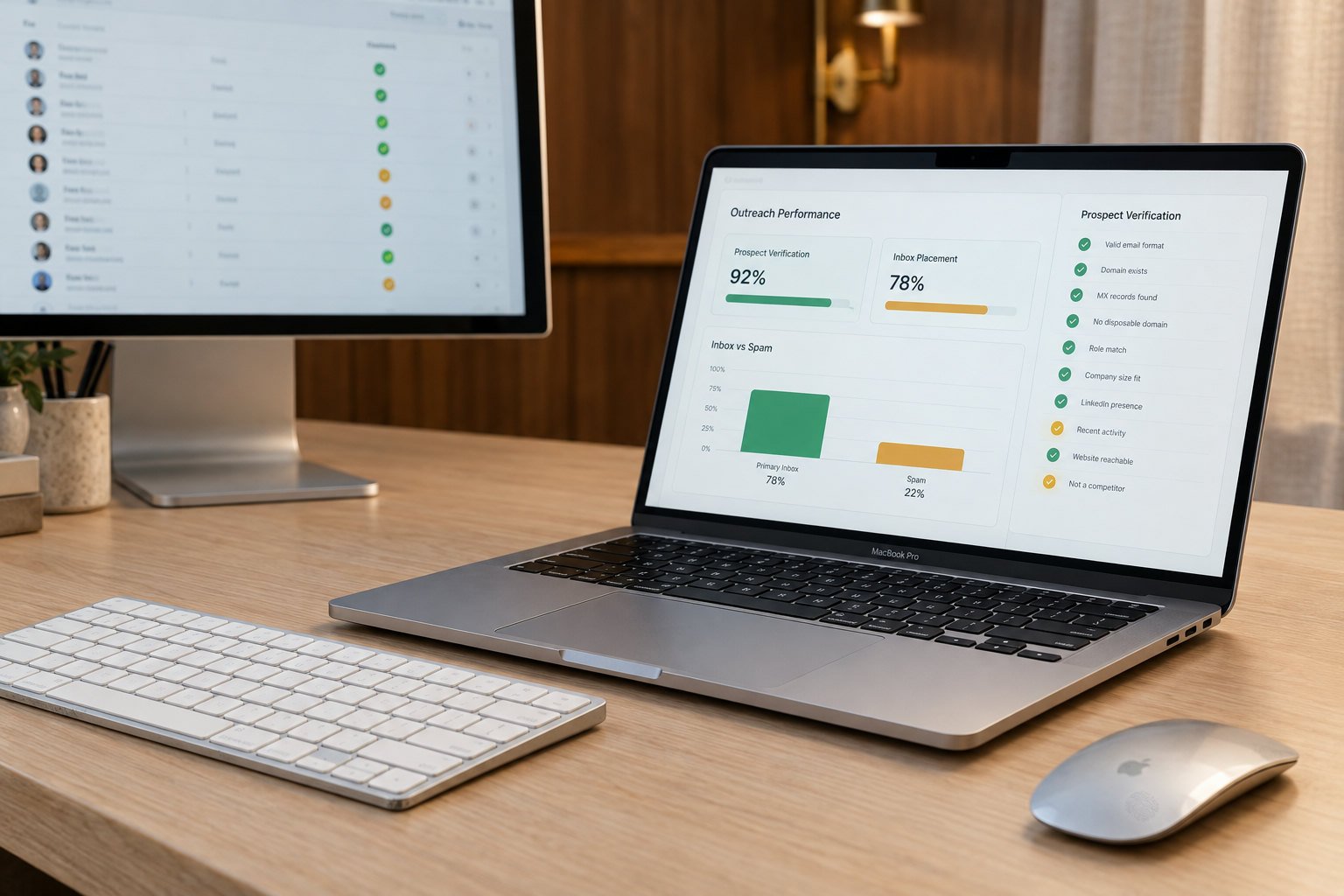
Rebuild Your Lead List With Verification Protocols
If bounce rates are above 8%, re-verify your contacts using Apollo.io, Clay, or a similar tool. Segment by industry and title during the rebuild. Cost: $800–$1,500 per campaign.
Implement Response Management
Replies route to one person (not a shared inbox). Each interested prospect gets contacted within 4 hours. Meetings get booked directly on your team’s calendar. Cost: $1,500–$2,500 per month for dedicated response management.
Launch Full-Service Managed Outreach
If you want end-to-end management (we handle list building, segmentation, script variation, A/B testing, follow-up sequences, and response management), full-service campaigns start at $5,200–$8,500 per month with a 3-month minimum.
A clean list is the table. Segmentation, pain-point-focused copy, optimized follow-up timing, and dedicated response management are the meal. You need all of them.
Real Campaign Results: Why the Diagnosis Matters
| Campaign Type | Initial State | After Diagnosis + Relaunch | Improvement |
|---|---|---|---|
| Toronto Staffing Agency | 40% bounce rate, $285 cost-per-meeting | 6% bounce rate, $118 cost-per-meeting | 59% reduction in cost-per-meeting |
| Vancouver IT Services Firm | 1.2% open rate, 0 qualified meetings/month | 8.7% open rate, 12 qualified meetings in month 2 | $94K closed in 90 days |
| Calgary SaaS Company | Getting replies, 8% converted to demos | Same reply volume, 31% converted to demos in 6 weeks | 288% improvement in conversion through response mgmt |
Frequently Asked Questions
1. Does the service area matter? Can we use a lead list from anywhere in Canada?
Yes, Best Leads serves all of Canada—Toronto, Vancouver, Montreal, Calgary, Edmonton, and beyond. Regional nuances in cold outreach are minimal (hiring is hiring, B2B pain is pain), but local familiarity helps. We’ve worked with campaigns targeting the whole country and region-specific campaigns in Halifax, Winnipeg, and Brampton with identical methodology and strong results.
2. How long does it take to see results after we fix the segmentation and copy?
You should see measurable lift in reply rates within 7–10 days. A complete campaign relaunch—new segments, new copy, A/B testing, response management—typically shows qualified meeting increases within 4–6 weeks. Full ROI visibility usually arrives by week 8–12.
3. Can I fix this in-house, or do I need a service provider?
You can build parts in-house (segmentation, script writing, A/B testing templates exist), but response management is where most teams fall short. If your team doesn’t have dedicated bandwidth to monitor replies daily and book meetings within 4 hours, you’re leaving 70% of your pipeline on the table. That’s when outsourcing to a cold email management partner makes sense.
4. What tools do we need? Is HubSpot or Salesforce required?
Not required, but they help. Sending platforms like Apollo.io, Instantly.ai, Lemlist, and Smartlead.io can run cold outreach standalone. If you already use HubSpot or Salesforce, we can integrate them to automate lead routing, follow-up sequences, and response tracking. Integration setup runs $1,000–$1,800 CAD.
abe
We’ve been helping B2B teams run cold email campaigns for 10+ years. We know exactly why your clean lead list isn’t generating meetings—and we know how to fix it.
- A B2B Founder Asked: ‘How Many Cold Emails Does It Actually Take to Book a Sales Meeting?’ — The Full Answer
- A Startup CEO Asked: ‘What’s the Difference Between a Lead List and a Verified Prospect List?’ — The Full Answer
- How to Build a Lead List and Sending Infrastructure for Cold Email Campaigns
- Cold Email Lead Generation in Canada: We Sent 14,837 Outreach Emails — Here’s What Drove 67% of Booked Meeting
- A B2B Founder Asked: ‘How Long Before We See Real Sales Meetings From Cold Email Outreach?’ — The Honest Answer